Showing posts with label Case Studies. Show all posts

Thursday, 4 February 2016

A Complete History of My Sexual Failures / Undefeated

A Complete History of My Sexual Failures

Director: Chris Waitt

Writer: Chris Waitt

Year it was produced: 2008

Cast: (all as themselves) Danielle McLeod, Olivia Trench, Chris Waitt and Hilary Waitt

Cinematography: Steven Mochrie

Editing: Mark Atkins, Chris Dickens

It was funded by Film4 and the UK Film Council


A Complete History of My Sexual Failures revolves around filmmaker, Chris Waitt and his attempt to interview most of his ex-girlfriends to find out why they dumped him and then from that information, try and make himself a better person. I personally believe it comes under the category of mockumentary, which is “a fiction film that uses documentary form to suggest it is actually a documentary”. Parts of  the film that suggest this are the fast changing camera angles such as when Chris is having a conversation with one of his ex-girlfriends at a dinner table and the camera constantly switches between each person. Also, when Chris decides to take many Viagra pills but there is a cut between when he puts the tablet in his mouth and when he swallows it, suggesting that he never took them. However, it is made in such a clever way that the audience are truly torn between whether it is real or not. Chris uses poor camera quality to create a documentary feel and props such as love letters, photographs and evidence of all his ‘girlfriends’ to make the audience believe that this is completely real. Another huge factor which contributes to the audience believing what they are watching is the fact that we end up emphasising with Chris. We begin to warm to him as a person through the use of comedy which makes us feel involved and also through feeling sorry for him, such as when he is talking to Vicky and they both get very emotional and when he opens up to us, we begin to like his character and therefore are more likely to believe the documentary because he is demonstrating real human emotions.

This is what critic, Jonathan Romney from Independent said: “A Complete History ... is quite a performance – and I do mean performance. Waitt maintains the pretence throughout that his film is a documentary, and as far as one can see, many if not all of the exes he interviews (or who angrily refuse to be interviewed) are women Waitt really has dated. His likeable mother – who has little truck with his brattish self-pity – also appears really to be his mother. Mind you, the end titles admit that some of the film's encounters had to be "reconstituted"; make of that what you will.”


From this information, I believe that this documentary is based partly on the truth. Chris may have used his real girlfriends and parts of the film may have been genuine but a lot of it is still scripted in order to create humour and enhance the film experience for the audience. Members of the audience, who claim to know Chris, state that his true personality is reflected in the documentary but again, he may be using this to make it even more believable. It was funded by Film4 and the UK Film Council. They are not going to waste money on making something that was completely spontaneous, they are serious companies and a whole team was put together for this. So to conclude, I believe it is completely scripted in most parts however is based on Chris’ life and his real ex-girlfriends and is an honest reflection on his ‘sexual failures’ but told in a slightly exaggerated manner.

A Complete History of My Sexual Failures is also an investigative documentary. This is because it introduces a problem/question which it then goes on to solve. The problem is obviously the fact that Chris struggles to maintain a stable relationship and cannot understand why he consistently gets dumped. He solves it when he realises he still has feelings for Vicky and then works things out with her and moves on so they are both happy and he then finds a new girlfriend in which their relationship seems to be running smoothly. It comes under the interactive mode because Chris makes use of direct mode of address when he looks into the camera and interacts directly to the audience. This creates a much greater sense of involvement and the audience feel included because they are being spoken to, rather than having to ‘listen in’ on a conversation. Furthermore, it is a personal documentary because Chris is providing the audience with his personal views and experiences regarding the subject matter and it could be described as very intimate.

My personal opinion on the documentary: I found it very humorous; there were many ‘laugh out loud’ moments so it was an entertaining viewing experience. Towards the end, I eventually managed to emphasis with Chris but this was only in the parts with Vicky because they were crying and seeing those emotions made me instantly warm to them both. The whole time I was watching it, all I could think was ‘is this real or fake?’ and at times, that definitely distracted my attention from the documentary because I was trying to make a sense of it.


Undefeated

Director: Daniel Lindsay and T.J. Martin

-Notice how there is no ‘writer’ for this documentary-

Cast (all as themselves): Montrail ‘money’ Brown, O.C. Brown, Bill Courtney, Chavis Daniels and Jeff Germany.

Year it was produced: 2011

Production companies: Zipper Bros Films, Five Smooth Stones Productions, Level 22 Productions and Spitfire Pictures.

Cinematography and editing: Daniel Lindsay and T.J. Martin
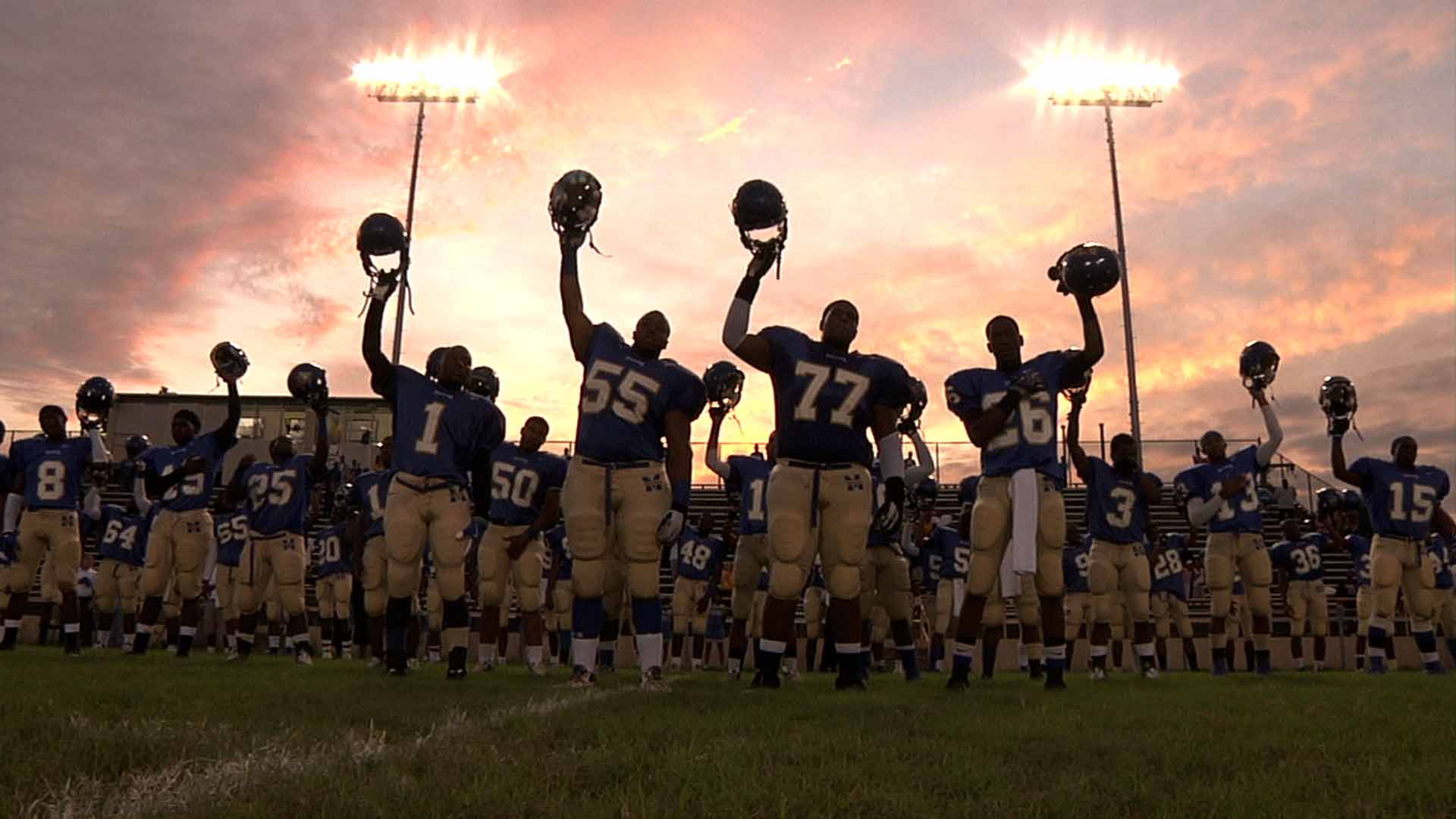

Undefeated is “a documentary on an underdog football team who look to reverse their fortunes with Coach Bill Courtney.” It furthermore covers the genres of coming of age (because we see the development and mental growth of the football players) and sport. It is set in Manassas and their team is called the Manassas Tigers. Undefeated is completely different to A Complete History of My Sexual Failures because it is not scripted and it displays real-life events as they are happening. It can therefore be classified under the observational mode because the camera records everything that is going on, allowing the audience to ‘listen in’ and through techniques such as: long takes, sync-sound and no ‘voice of god’ narrator, the audience are not taken away from the reality. This contrasts greatly to Sexual Failures because in that documentary, we as an audience feel as if we are there with Chris the whole time due to his strong use of the interactive mode which means we have gone beyond the point of observation. Furthermore, Undefeated is an ethnological documentary because it explores the lives and culture of a particular ethnic group.

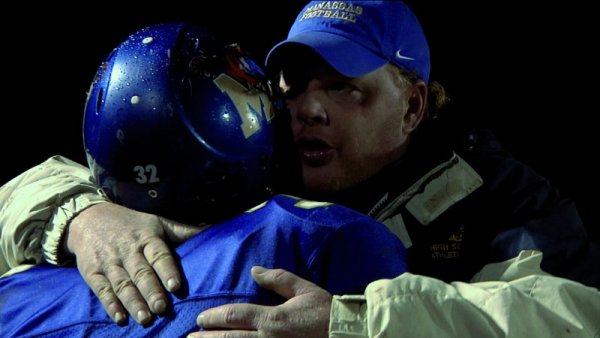
Undefeated explores themes which are meaningful and therefore have an emotional impact on the audience. For example, it looks at unity and fatherhood. All the team members come together and work as hard as they can to achieve their goals. As the narrative develops, this becomes especially evident because we can see them become closer and special bonds start to form. Their Coach is hugely important and we can clearly see how much his team means to him, for example this is evident towards the end when he is saying goodbye to them. He acts as a father figure to them, guiding them through, offering advice and being there for them when times are hard. He is able to motivate them and encourage them to follow their dreams, the main piece of advice he gives them is: “the character of a man is not measured in how he handles his wins, but what he does with his failures”. This furthermore brings up the theme of masculinity because he is stating that in order to be a ‘real man’ you have to be strong and constantly stand up for yourself, even if things are not going in your way.


Another huge theme is class and this is also evident in Sexual Failures. There is a juxtaposition in class between the football players and their coach. When we are introduced to the football players’ neighbourhood, we can see that it is of a working class status whereas the Coach’s living conditions are more of a middle class status, with big houses and generally an area of more wealth. However when they all come together, class does not seem to have a huge impact on their relationship and I feel this documentary wants us to focus on their personalities and connections with each other rather than their class. In Sexual Failures, Chris is demonstrating a working class lifestyle because we can see that he lives in a very small, cramped flat. He does not show any pride for himself, his flat is a mess and un-hygienic and he can barely make himself look presentable.

My personal opinion on the documentary: I thought this was a great documentary, in many parts I was truly touched by it and I was easily able to emphasis with the football players and the Coach. I thought it explored strong themes and it is a documentary that matters because it is so impactful. I cannot say if I preferred this or A Complete History of My Sexual Failures because they were so different and I liked them for different reasons. Obviously, the comedy element to Sexual Failures was a huge positive but the strong sense of realism in Undefeated seemed to draw me in more.

Thursday, 26 November 2015

Rust and Bone VS Mediterranea

On Friday 16th of October, I went with my film and media class to watch a screening of Mediterranea at the BFI Film Festival in Brixton. This took place in a small arthouse cinema called ‘The Ritzy’ and it was followed by a short question and answer with the director, Jonas Carpignano who gave some useful information about the production of the film and on the characters which I found very intriguing. This was Carpignano’s first feature film but he has previously directed five short films: La Casa d’Argento Bava (2006), Resurrection Man (2010), Bayou Black (2011), A Chiana (2012) and A Ciambra (2014). A common similarity that I noticed between most of these films and Mediterranea is that they show the journey of the protagonist(s) and at times, the narrative is based upon the director’s historical and cultural background.  Due to this being his first feature and the actors being unknown, the director explained that it was difficult to fund the film and that he had to go to about five different production companies. Jonas Carpignano also wrote Mediterranea and it was produced in 2015 with End Cue and it was first released on September, 2nd in France. The music was by Dan Romer, the director of photography was Wyatt Garfield, the editing was by Sanabel Cherqaoui, Affonso Gonçalves and Nico Leunen and the production design was by Marco Ascanio Viarigi.
After watching the film ‘Rust and Bone’ in class, we were asked to do a comparison between that and Mediterranea due to them both being in world cinema, and sharing similar themes including poverty, power and conflict, therefore them being great for our exam. Rust and Bone was directed by Jacques Audiard, written by Jacques Audiard and Thomas Bidegain and the story was by Craig Davidson. It was produced by Jacques Audiard, Martine Cassinelli and Pascal Caucheteux with Canal+ and Why Not Productions in 2012.  Jacques Audiard has gone on to direct Dheepan in 2015 which is about a fighter who flees to France, to which he ends up working as a caretaker. Regarding Rust and Bone, the music was by Alexandre Desplat, the DP was Stephane Fontaine and the editor was Juliette Welfling.
Starring: Koudous Seihon (Ayiva), Alassane Sy (Abas), Pio Amato (Pio), Annalisa Pagano (Cristina Riso), Sinka Bourehima (Ahmed) and Davide Schipilliti (Rocco), Mediterranea is a social realism, documentary drama which looks at the dangerous life of refugees and it follows the journey of Ayiva and Abas as they make their way from Africa to Italy in the search for a better life. Rust and Bone is a social realism, drama, romance which also follows the journeys of the two main protagonists: Stephanie (Marion Cotillard) and Alain (Matthias Schoenaerts). As well as exploring the developing relationship between the two of them, the film looks at Stephanie’s journey of accepting and dealing with her disability and Alain’s journey of supporting himself, his family and Stephanie as well as having to deal with poverty.
So in terms of the theme of poverty, Mediterranea and Rust and Bone show this very well. In Mediterranea, the protagonists are running away from poverty but clearly cannot escape it and throughout the film, they are constantly exploited in terms of their money. They have to undergo hard labour jobs just for a small amount of money and this really highlights their desperation and need which was tragic but realistic. In Rust and Bone, Ali is the character living in poverty and the audience are immediately made aware of this from the opening sequences. His son, Sam complains that he is hungry on the train and Ali immediately rummages through the carriages, picking up anything eatable he can find and the two of them eat it very quickly with their hands. The fact they are eating in this manner firstly shows how desperate they were for food and they clearly have not eaten in a long time and it also symbolises animalistic traits. This is important because animals are often under the control of someone and this could potentially show that they are under the control of the government, the higher class rulers who tax them and provide little support for their state of pure desperation or it could show that society views them as animals, as worthless and therefore show little respect towards them. Following the train sequence, we see Ali rob from a store and then he is sitting on a beach with Sam, playing with McDonald’s boxes. There is a huge juxtaposition here because Ali and Sam are wearing old, dirty clothes which clearly indicate their lack of wealth as they sit on a beautiful white sand beach and they do not seem to fit in at all. Little do the middle/upper people on the beach know that not far away, there are people living in huge amounts of poverty who are faced with one of the biggest challenges of survival.
It could be said that both films show a representation of masculinity, especially in Rust and Bone. Ali demonstrates his power and strength when fighting with men who quite frankly, are a lot bigger than him, just to earn small amounts of money, showing that in order to survive in the real world, you need to be strong and masculine. He is also illustrated to have many sexual relationships with women and this is another stereotype of having ‘masculinity’ and he seems to be very proud of this trait and shows it off to Stephanie. He seems to gain his power over women through sex which represents men to be powerful and manipulative and women to be weak and easily influenced.
The theme of conflict is also conveyed through this representation because there are times when the characters masculinity is challenged. This is shown through their relationships with their children. When travelling away from Africa, Ayiva has no choice but to leave his seven year old daughter behind and when he has a skype call with her and he sees her receive and love the present he sent her, he cannot help but cry. However, when he does cry he covers the camera with his finger, initially showing that he does not want to upset his daughter but deeper down, it could show that he is ashamed to be showing these emotions because they are not ‘masculine’ and he feels he needs to be a ‘man’ about the whole situation. This illustrates the ‘new man’ representation because he is showing his more sensitive, caring side.
The developing relationship between Ali and Sam is shown as the narrative develops and their relationship reaches its climax during the lake scene in which Sam becomes trapped underneath the ice. Ali uses all his strength possible to smash through the ice, his knuckles are bleeding and he is clearly running out of energy but this does not stop him and he continues to crush his bare hands against the freezing ice until he is able to retrieve Sam from underneath it. This scene was so emotionally intense because it truly showed how much Ali cares for Sam and he was willing to put himself through so much pain to save his life and although this strength is ‘masculine’, it is the hospital scene that really challenges this trait. Ali is on the phone to Stephanie, he is crying telling her please not to hang up, to stay with him and this brings out his sensitive, emotional side and shows that he is not fully independent, he needs the support and love of Stephanie and is not afraid to admit this to her.
The theme of conflict is further expressed through the character of Stephanie. She experiences inner conflict because after her terrible accident that left her stranded in a wheelchair, she feels trapped within her own body. She clearly feels useless, as if she may as well give up and this is indicated by scenes such as when she wants to give away all of her clothes- she is demonstrating defeat. I felt the restriction of being in a wheelchair was portrayed so well in Rust and Bone, not that I have experienced it but I know what it is like to not be able to move and the film clearly demonstrated the lack of strength you have and the worthlessness and emotional pain and impatience that Stephanie experiences was incredibly heart-breaking and moving. The fact that she is trapped inside the wheelchair links to the whales at the beginning of the film. The whales are shown to be in captivity, they cannot move very far, they have no freedom and they are being used and manipulated for the entertainment of humans, so they are being exploited for their money and entertainment. This symbolises Stephanie because suddenly, she experiences what it is like to be the whales, in which her job was to train them and she understands their captivity. The fact that she earned money by training them is extremely important because after her accident, she has to be trained herself, needing help to go about her daily life so there is a completely mirrored reflection of the whales and Stephanie.
The cinematography within Mediterranea also added to the realism of the film because it was all filmed using handheld camera. I believe the director did this to represent how the lives of the migrants in this film are not constructed or carefully placed into a scripted narrative but instead, they are gritty and real. The camera was also quite shaky at times which symbolises how the characters journeys and experiences were unstable and they were forced to go through terrifying and emotional events which ‘shook them up’ meaning they have not been able to get their lives under control. Regarding the cinematography, there were some absolutely beautiful shots throughout Mediterranea with the strong inclusion of bokeh behind the night-life scenes which I found truly stunning and I believe Carpignano included this to represent how although the characters are constantly surrounded by harshness and negativity, they can still look to find the good and beauty in their situations. There was a recurring extreme close up shot that was used of Ayiva and Abas each time they reached a new location and this was an effective way of documenting their journey because the audience were able to see their reactions which were often a look of fear and helplessness because they were completely unsure of what to expect.
In conclusion, I really enjoyed Mediterranea because at times, the narrative was very emotionally moving and I was able to gain connections with a lot of the characters. The messages touched upon were clearly close to the director and a lot of passion and heart-felt emotion went into making Mediterranea which was definitely reflected throughout. Although I found the ending slightly confusing due to the ambiguity and enigma codes that it left the audience with, it was still very effective at expressing the main theme of ‘personal journeys’. The cinematography was incredible, the performances were outstanding and I am going to rate this film 7.5/10. It was not my favourite film from the collection I have watched at the BFI Film Festival (Ayanda was my favourite) but it was definitely impactful and I would encourage others to watch it. I also loved Rust and Bone because the symbolism was visually and metaphorically stunning and I felt engaged for the whole duration of the film. The performances were so moving, they were so real and I think the director really reflected the restriction and entrapment that Stephanie felt. There are clearly many differences but also similarities between Rust and Bone and Mediterranea and my favourite of the two was Rust and Bone because I felt it impacted me more and I felt drawn in however lost focus at times with Mediterranea. So I will rate Rust and Bone 8/10.


Tuesday, 13 October 2015

Comparison between La Haine and City of God


In this analysis, I am going to be comparing the two films: ‘La Haine’ and ‘City of God’. They both fall into the category of world cinema, with La Haine being French and City of God being Brazilian. World cinema films are known for illustrating harsh messages revolving around social and political issues and because of this, they may struggle to attract globalised audiences meaning they have to rely strongly on their distributors and exhibitors. La Haine was directed and written by Mathieu Kassovitz; it was produced and distributed by Canal + in 1995. City of God on the other hand was directed by both Fernando Meirelles and Katia Lund, written by Braulio Mantovani (based on the novel by Paulo Lins) and produced in 2002 with O2 Filmes and VideoFilmes, with the distributer being Miramax Films. Production Wise, there is a huge difference between the box offices of these films, however the budgets were fairly similar. La Haine had a budget of $2.5 million and City of God had a slightly higher budget of $3.3 million. Unfortunately, La Haine went on to make less money in the box office with an overall total of $309, 811 whereas City of God made a huge increase and went on to make $30.6 million. During the distribution stages, both films were screened at Cannes Film festival however the reason I believe City of God made more money is because Miramax is a big, American distributor/production company  so could gather a much more globalised audience compared to Canal +which is a French company which is not known worldwide.

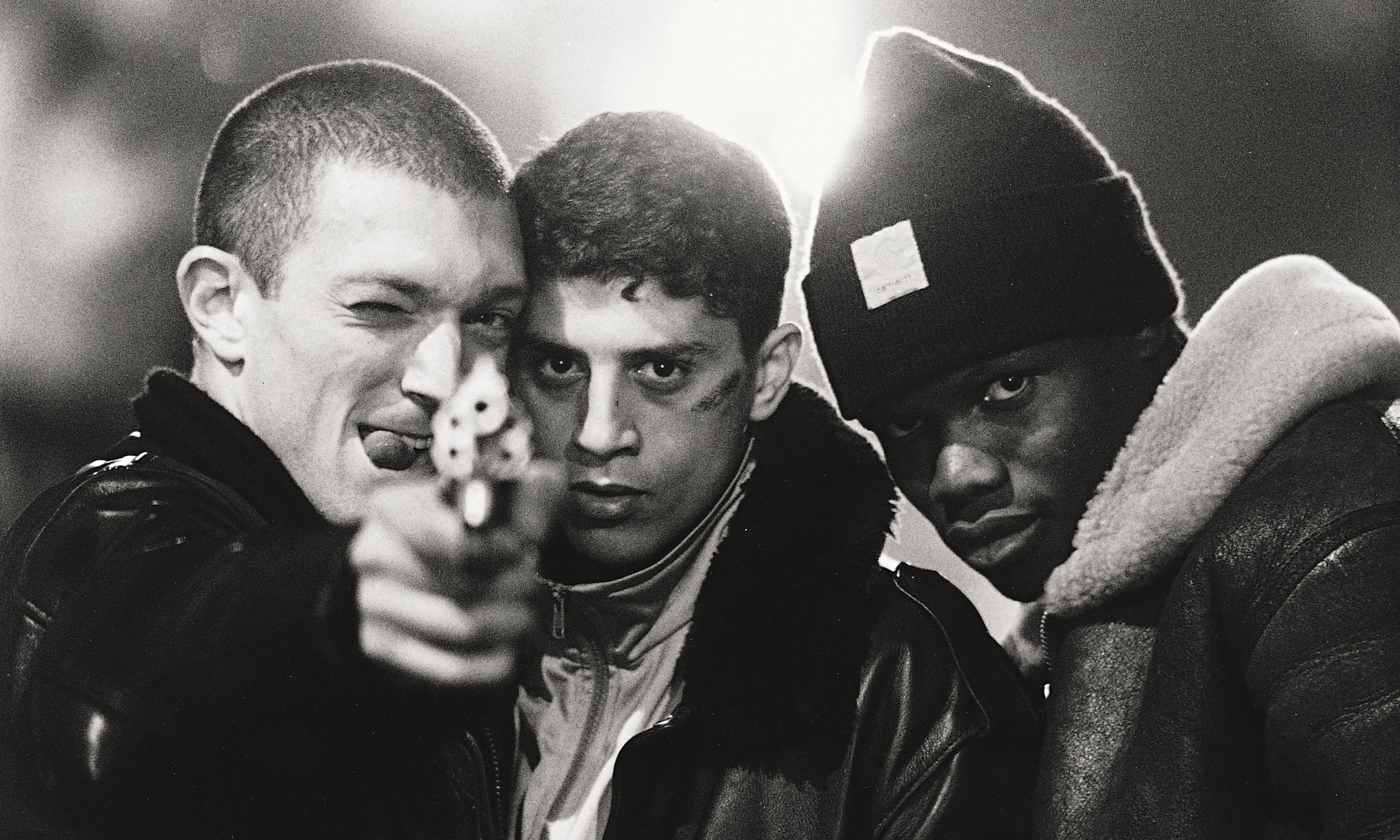
La Haine follows Vinz (Vincent Cassel), Hubert (Hubert Kounde) and Said (Said Taghmaoui) through their twenty four hour period spent in the French suburban ghetto after their friend, Abdel is beaten unconscious by police. This causes riots in which a policeman loses his gun which is then found by Vinz who threatens to kill a member of the police if Abdel dies in hospital. City of God is narrated by the main protagonist, Rocket (Alexandre Rodrigues) who as well as telling his own story, looks over at the lives of Li’l Ze (Leandro Firmino) and Benny (Phellipe Haagensen). They are growing up in the favelas of Rio de Janeiro and have contrasting dreams: Rocket wants to become a photographer and escape the favelas whilst Lil’ Ze and Benny become drug dealers and become extremely power hungry, which Rocket has no interest in. Both films illustrate an ongoing cycle. In La Haine, there is a cycle of violence, the protagonists cannot escape from the negativity that surrounds them and no matter how hard they try, they will always be forced into uncomfortable situations. In City of God, three generations worth of youths get involved in the dangerous hood lifestyle (The tender Trio at the beginning, Lil’ Ze and Benny etc. throughout the main duration of the film and then the Runts at the end of the film), illustrating that this is the ‘normal’ lifestyle in the city of god and it is what is expected of each generation, so they feel as if they have to do what is destined for them.


The contextual factors play a huge role in both La Haine and City of God because they are both based upon true stories relating to social and political issues at the time regarding poverty, power and conflict. La Haine is based upon the murder of a black youth named Makome M’Bowole who was shot and killed whilst in police custody which resulted in huge protests against the police and real life footage of the riots is used at the beginning of the film during the opening credits. City of God is based upon the novel to which the writer, Paulo Lins once lived in the favelas and went on to become a successful photographer. The characters in the film are based upon real people including Knockout Ned in which the real version of him is shown during the credits of the film. The narratives of La Haine and City of God have evolved from strong themes such as police brutality, corruption, prejudice, class and violence and this realism confirms that both films have been made in response to their social and political context. The fact that both directors are aware of these issues enhances the power of the narratives and therefore results in stronger impacts on their audiences.

Although both of these films fall under the genres of crime, drama, social realism in the style of a documentary, City of God appears to follow a Hollywood style whereas La Haine completely follows an independent cinema style. I say this because COG has a protagonist/hero (Rocket) with a goal to escape from the favelas and he achieves this through his talent in photography. Contrastingly, La Haine is much more pessimistic because as hard as the protagonists (Hubert, Vinz and Said) try to escape from the estate, they are constantly being forced into negative situations with ongoing violence, even at the end of the film. Therefore, La Haine illustrates a much more realistic picture of what it was like in that time and context whereas COG does portray the harsh, tragic realism of the favelas but at the say time, suggests that one man can escape from the power, poverty and conflict surrounding him and can be rewarded for hard work- creating a sense of hope which is unrealistic. This is shown through Rocket who is given the option to choose photography over drugs and violence. On the other hand, Hubert from La Haine puts in all his efforts when creating a gym for youths to release their frustration and he is not rewarded for it, instead it is burnt down by those who he thought would use it. The fact that the film ends with Hubert pointing a gun at a non-uniform officer almost implies that he has given up on his dreams and accepted that there is no hope for him.


La Haine and City of God both portray negative representations of the female gender. In COG, women are only represented in terms of sex and men are shown to have complete power and control over them, additionally shown through actions such as rape. A scene which highlights this is the one in which Knockout Ned’s girlfriend is raped and he is forced to hear her screams, objectifying women because they are being used by men to let out their built-up emotions and frustrations and they are portrayed as weak because they do not fight back. Even the woman who has a decent job as a journalist is shown in terms of sex but this time, to have control and manipulation over the male gender because she uses sex to manipulate Rocket and meet her needs, illustrating that women can only gain power through their sexual hold. In La Haine, there is an underrepresentation of women as they are barely seen in the film at all, and the only female characters we are really introduced to are the protagonist’s families who are only seen inside their flats. This follows the domestic housewife stereotype, suggesting that their only role is to look after the home and family whereas the men are seen everywhere, their roles including: policemen, protagonists, criminals and youths- representing them as the superior gender who have more power over women. However, the males in both films still struggle with their sense of masculinity and they find it difficult to maintain it. To be seen as a ‘man’, you have to be brave, violent and able to handle a gun. In COG, generations follow in their elder’s footsteps, using guns and drugs and planning murders. Maybe they feel as if they have to do this in order to be seen as a man by society because if they don’t, they may be seen as weak by the other youths. The character of Vinz in La Haine struggles with his masculinity and this is shown through the scene in which he cannot bring himself to shoot a skinhead and he is disappointed in himself because he is aware that he is coming across as ‘un-masculine’ to his friends.


There is a definite contrast in diversity regarding these two films. In La Haine, the three protagonists are all of different ethnicities: Vinz is Jewish, Hubert is black African-French and Said is Arab African-French whereas in City of God, it could be said that there is an overrepresentation of black people because the vast majority of the characters are black youths. I find it interesting that both of the directors for these films are white and could fit into the categories of our dominant ideology. Due to this, some people have accused them of exploiting the people in their films and the way they represent them because they go on to make large profits which do not have any impact on those living in the favelas or places with poverty. However on the other side of the argument, it gives those who are more fortunate the opportunity to see what the lives are/were really like for those living in poverty and there are provided with a sense of realisation that could result in a change of heart.

The visual style and cinematography of La Haine and City of God strongly contrasts, disregarding the similar mise-en-scene. La Haine is in black and white to enhance the realism and the film more gritty, taking the audience away from the beautiful scenery of France. City of God is shot in full-colour however at the beginning of the film, the colour pallet is bright and vibrant but as the narrative develops, the colours become duller- possibly representing how the social and political issues are slowly taking over and draining out the life in the city of god. The camera shots are still and long in La Haine which to me, allowed a greater and more intense focus on the characters, whereas handheld camera movement is used in COG which enhances how rough it is in the favelas and makes it feel more like a documentary.

Overall, I loved both La Haine and City of God because they had very strong themes and the huge sense of realism really enhanced the viewing experience. They clearly share many differences and similarities regarding representations, visual style, production, social and political context and of course, poverty, power and conflict. I would rate them both 8/10. 

La Haine Analysis


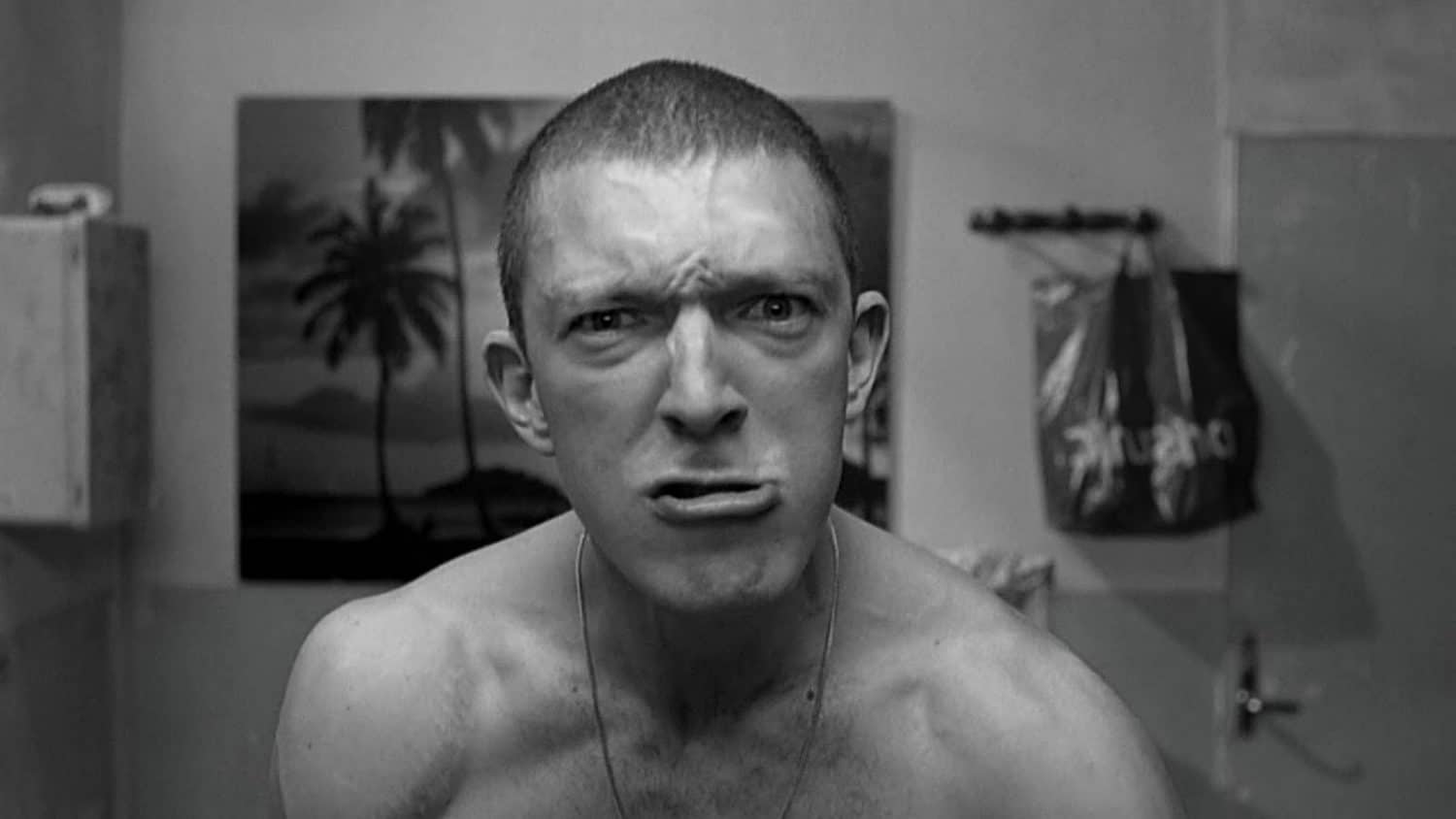
La Haine is a French, black and white film directed and written by Mathieu Kassovitz. It was produced by Christophe Rossingnon in 1995 with Canel plus. The most recent film Kassovitz has gone on to direct is Rebellion in 2011 which is about dissidents in a French colony who attack a police station and take hostages. There are immediately similarities between this and La Haine regarding police and crime. Starring Vincent Cassel (Vinz), Hubert Kounde (Hubert), Said Taghmaoui (Said) and Abdel Ahmed Ghili (Abdel), La Haine follows Vinz, Hubert and Said through their twenty four hour period spent in the French suburban ghetto after their friend, Abdel is beaten unconscious by police. This causes riots in which a policeman loses his gun which is then found by Vinz who threatens to kill a member of the police if Abdel dies in hospital. It is a gripping crime, drama film which had a budget of 2.3 million Euros and then went on to make $309,811 in the box office. This is a fairly low budget, therefore suggesting that La Haine is an independent film. It does follow some of the conventions of independent films by having lots of dialogue, limited special effects, actors who may not necessarily be well known and a specific choice of music.

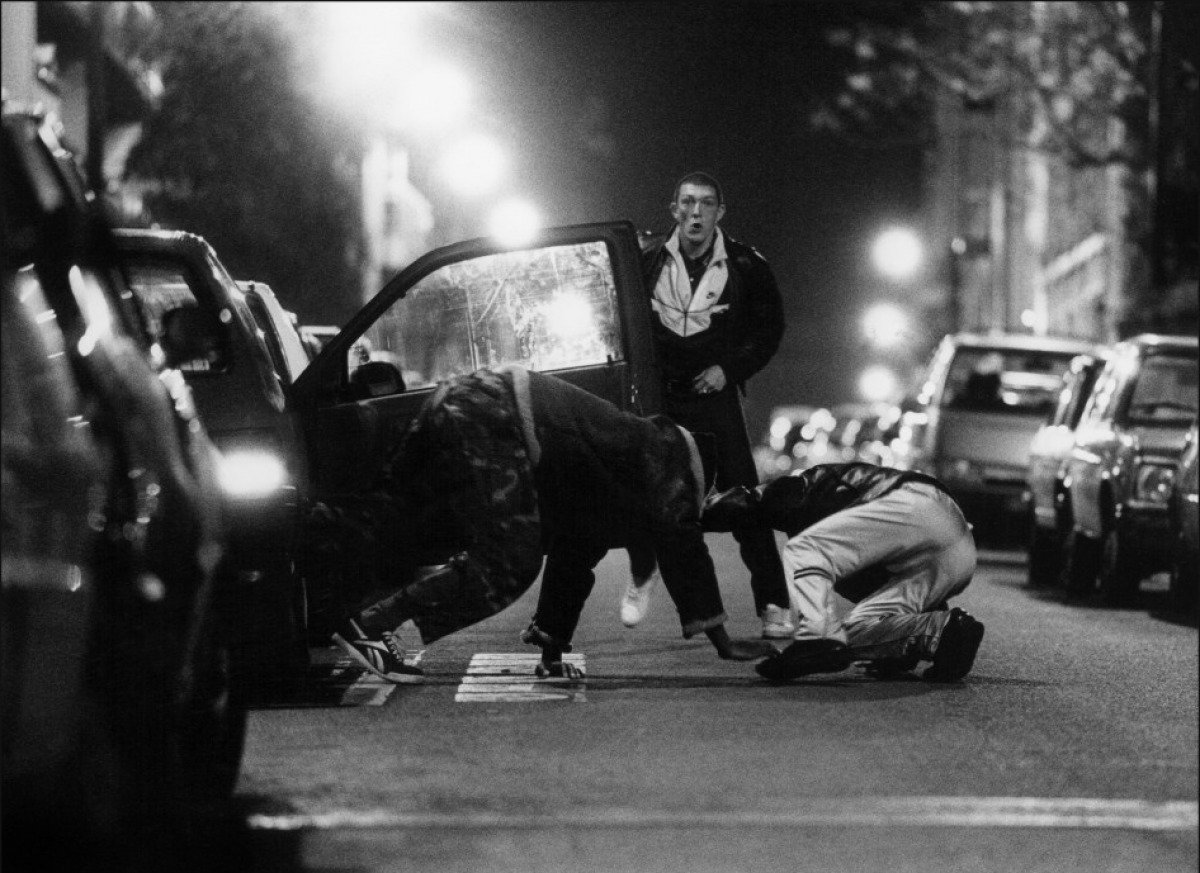
La Haine was made in 1995 and the context of France at this time links to the film as a whole. There was a clear separation between upper, middle and lower class people and this is made apparent in La Haine because the lower class people from the estate, surrounded by poverty are juxtaposed with the upper/middle class people in Paris due to their mannerisms, locations and clothing etc. A scene which clearly highlights this is the one that takes place at a late night exhibition in an art gallery. Inside is filled with well dressed, upper/middle class citizens, making the protagonists stand out and look out of place and I believe this was a very significant scene because it is when the class divide becomes most noticeable to the audience. There were more than 30000 car thefts per year (there is a car theft scene in La Haine) and 1.4 percent of the population were victims of assault (one of the main narrative strands is the fact that Abdel was brutally attacked by police).  During the 1970’s, there was an economic crisis and during this, immigration was limited by the French government and many other European countries constantly blamed unemployment on immigrants (this helps to explain the racism in La Haine). It clearly follows the genres of drama and crime because it is very realistic and Kassovitz definitely does not shy away from the truth, resulting in a gritty narrative which reveals the brutalities of the French society in the time it was set. Crime is constantly developing the narrative, pushing the characters into new situations and challenging them and their abilities, strengths and morals.


I felt the narrative structure of La Haine was very powerful, especially how the beginning and end was linked through the quote: “It's about a society on its way down. And as it falls, it keeps telling itself: "So far so good... So far so good... So far so good." It's not how you fall that matters. It's how you land.” I really liked how in the final quote, the word ‘man’ was replaced with ‘society’ because it reveals one of the overall messages of the film which is that France as a society was falling and crumbling down due to the crime within it and possibly, it was oblivious to its damage (“so far so good”) so kept its focus on a new equilibrium (“it’s how you land”). The film title, La Haine translates to ‘hate’, illustrating that hate is the force that is destructing society and tearing it apart and this theme is reinforced again and again throughout the film to emphasise the negative impact it had on France.  The narrative is restricted to a twenty four hour period and the audience are constantly given reminders as to how much time the three men had left and I believe that this manipulation of time was very symbolic. Firstly, it creates an extreme amount of tension because there is a sense of pressure, especially as Vinz has vowed to kill a cop if Abdel dies, so the audience are expecting something dramatic to happen at any moment which leads to a build-up in suspense. Secondly, it links to the quote spoken at the beginning and end because as the clock is ticking down, the plot of the film is still ‘falling’ and we are waiting for that much anticipated ‘landing’. As the time becomes less and less, we are getting closer to the ground which again, creates tension and it is an accurate representation of the pressure of time.


The narrative structure of La Haine almost breaks the rules of Todorov’s theory due to the numerous disruptions throughout which may have been purposely used to reflect how the main characters are always surrounded by crime and wherever they go, they cannot escape from it- just like the narrative cannot escape from its disruptions. These disruptions help with the build-up of suspense and I believe they foreshadow the climatic ending which also reveals messages such as karma because there are consequences to the actions of the men. Within the narrative, there is a binary opposite between the police officers and the criminals who clearly have different intentions. The police officers are negatively represented to be scandalous because they are very brutal towards the youths and criminals and they treat them as if they are animals. The criminals on the other hand may be portrayed as violent, but they are also shown to have better intentions as they are fighting for justice. However, I do not believe this to necessarily be an anti-police film because it realistically follows the context of what France was actually like regarding police brutality so the audience are given a true insight into what life was like during that period of time.


There were a variety of key scenes in La Haine which had a large amount of significance. For example, there is a scene towards the end of the film in which the three protagonists have cornered a skinhead (played by Kassovitz) and Vinz has a gun pointed at his head whilst Hubert is trying to convince him to shoot. There is a build-up of tension but eventually, Vinz cannot kill him and lets the skinhead free. This illustrates that he is not the fearless and heartless gangster he pretends to be and deep down, has a good, true nature which further indicates his insecurities and it challenges his masculinity because he is seen as weak after not murdering the skinhead. The fact that Vinz owns a gun throughout the film is very symbolic because the gun itself represents Vinz in the sense that he is a ‘ticking time bomb’ whose anger and aggression can be triggered by just one small action (the trigger of a gun) to which it then explodes into violence.

The representation of women in La Haine follows the domestic housewife stereotype because when we are introduced to the men’s families, they are all female but we only see them inside their flats. There are males everywhere in the banlieue- the protagonists, police, criminals and youths are all male and this represents men as having more strength, superiority and power whereas women are represented as only having authority inside the home, where they have to look after it. There is clearly a very negative representation of youth throughout as they are portrayed to be violent, aggressive and disrespectful which is shown through iconography such as guns, drugs and cigarettes and also through mannerisms such as swearing, shouting, gang fighting and theft. This could construct a false idea to the audience that all youths behave in this way when in fact, they were represented this way due to the location they were in (the estate) because the scenes that took place in Paris were not so rough and gang related. However, I believe the police in the film have a much more negative representation than the youths due to their unnecessary behaviour in scenes such as the rooftop scene, the hospital scene and of course, the end scene where they get carried away with using their weapons and ‘power’ to their advantage.


In conclusion, I really liked La Haine and I would rate it 9 out of 10. I thought the unfolding of the narrative was very effective and I was gripped throughout due to the director’s strong use of tension. The character development was exceptionally good and I learnt a lot more about each of the main characters as the film went on which meant I became more emotionally attached to them and I could understand why they may act to situations in certain ways. What stood out to me most was the visually stunning cinematography, especially the use of depth of field which ensured full focus was on a particular character or prop. The beautiful shots of France were juxtaposed with the actual plot which shone a negative light on its society and the fact it was in black and white helped to add to the serious tone of the film and it enhanced the realism of it. Black and white may also have been used to steer the audience away from the stunning scenery of France and guide them to focus more on the characters and the negativity that is surrounding them and the area. It enhances the fact the film is based in a working class estate, giving it a bleak appearance and making it clear that the protagonists are living in poverty so by using full colour, the audience may have been distracted from these points. 

Saturday, 21 March 2015

Quentin Tarantino VS Spike Lee

Quentin Tarantino 


Who is he?

Quentin Tarantino is an American film director, screenwriter, cinematographer, producer and actor, born in Knoxville, Tennessee on 27 March, 1963. He was born to nurse, Connie and an Italian-American actor and musician, Tony Tarantino. Quentin Tarantino has had a love for films from a young age and he grew up in South Los Angeles with his Mother who took him to the cinema from the age of around 6. He saw films such as Abbot and Costello Meet Frankenstein, The Wild Bunch, Carnal Knowledge and Deliverance which were all inspirations for him, especially Abbot and Costello Meet Frankenstein. 

Where did he train?

Quentin Tarantino studied at Narbonne High School and Alexander Fleming Middle School however, he hated his time in education and would easily choose watching films over studying. When Tarantino was aged 22, he got a job at the Video Archives in Manhattan Beach in which he wrote the scripts for True Romance (in 1987) and Natural Born Killers (in 1988). In 1990, he made $50,000 for the True Romance script and he used this money to make the script for Reservoir Dogs with his friends as the main characters. Soon after, Tarantino left the Video Archives and he met Lawrence Bender (who now is often the producer for Tarantino's films) when doing rewrites for a small Hollywood production company called CineTel. Lawrence knew Harvey Keitel who saw and was impressed by the Reservoir Dogs script so raised more finance for it as well as helping Tarantino with casting. The film was then released in 1992 and then after the release and immense success of Pulp Fiction in 1994, Tarantino went on to be a major figure in the film industry.

What films has he made? What are his main values and themes?

Tarantino has 23 writing credits, 30 acting credits, 20 producer credits, 16 director credits and 2 cinematography credits. Popular films he has directed include: Reservoir Dogs (1992), Pulp Fiction (1994), Jackie Brown (1997), Kill Bill Vol.1 (2003), Kill Bill Vol. 2 (2004), Death Proof (2007), Inglourious Basterds (2009), Django Unchained (2012) and he is currently working on The Hateful Eight. His films are best known for their extreme violence, a lot of which is suggested off screen which increases the intensity because the audience are given the opportunity to have gruesome imagery in their minds. He also makes references to cult movies and television and makes use of non-linear narratives in some of his films including Pulp Fiction and Reservoir Dogs. Smaller trademarks in his films include long lasting scenes, a scene at the beginning of the film before the main titles are shown, restaurant scenes and his protagonists are often violent tempered and will overcome the antagonist using brutality. The major theme expressed in most of Tarantino's films is revenge and 'repaying evil with evil' and other common themes are: violence, secrecy, hatred, trust, betrayal, friendship, murder and death. 

What awards has he won? 

Quentin Tarantino has won 122 awards and has received 103 nominations. These awards include 2 Oscars for best writing and original screenplay for both Pulp Fiction and Django Unchained, 2 Golden Globes for best screenplay again for both Pulp and Django, and 2 BAFTA awards for best original screenplay (Pulp and Django). 

Controversy between Quentin Tarantino and Spike Lee: 

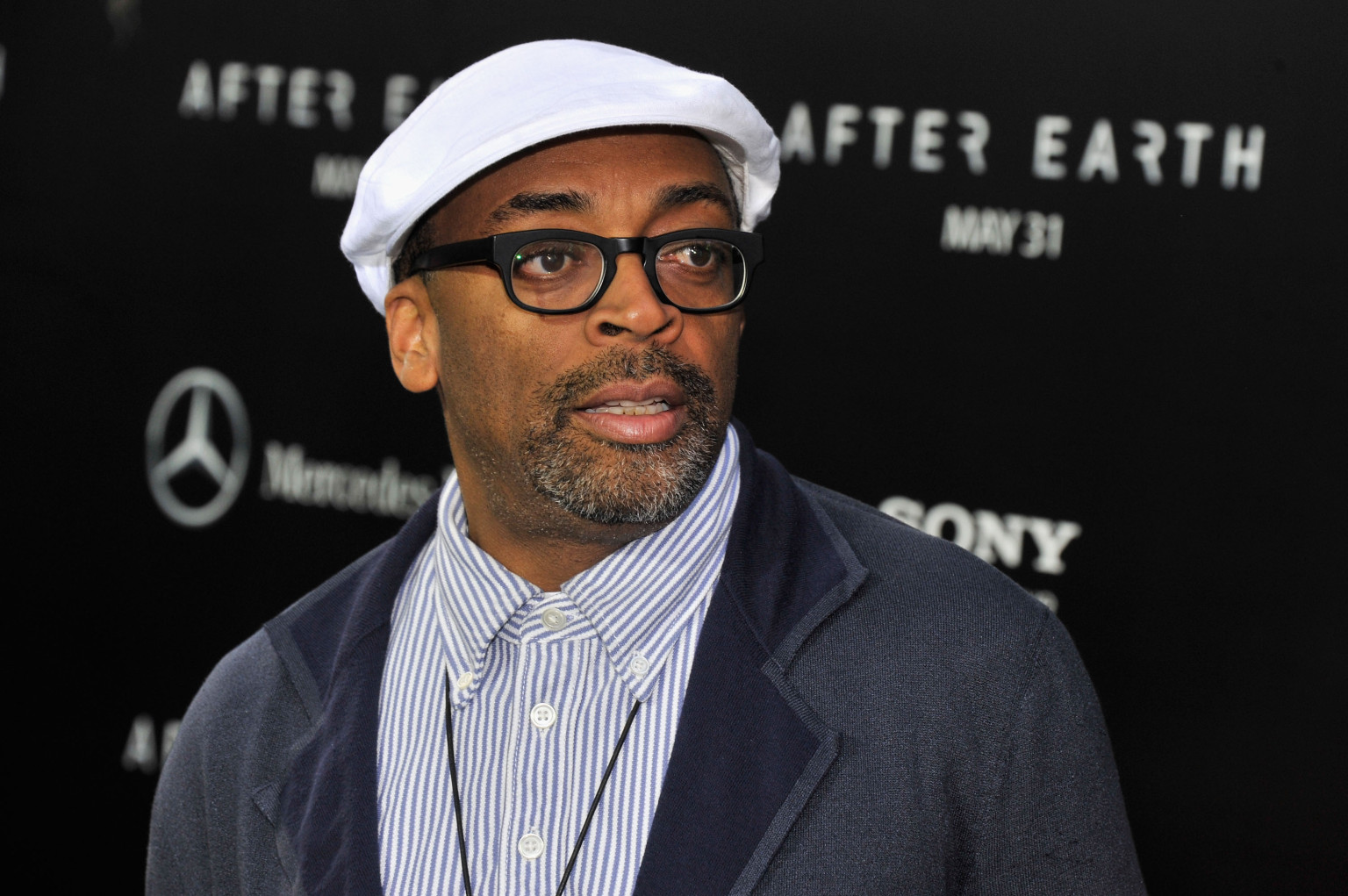
There has been some major controversy between Quentin Tarantino and Spike Lee, firstly as Lee is strongly against Tarantino's incorporation of the n-word in a lot of his films and in Jackie Brown, Lee calculated his use of the word to be 38 times. However, it is Django Unchained, which is based around slavery, that caused the largest amount of controversy between the two men. Lee claimed that he would never watch the film because it would be disrespectful to his ancestors and he expressed his hatred towards the film on twitter by writing: "American Slavery Was Not A Sergio Leone Spaghetti Western. It Was A Holocaust. My Ancestors Are Slaves. Stolen From Africa. I Will Honor Them." 

Spike Lee 


Who is he?

Spike Lee is an African-American film director, producer, writer and actor born in Atlanta, Georgia on 20 March, 1957. He was born to Jacqueline Carroll, a teacher of arts and black literature and William James Edward Lee III, a jazz musician and composer. 

Where did he train?

Spike Lee studied at John Dewey High School in Brooklyn then after enrolled at Morehouse College which is a historically black college. It was here he completed his first student film called Last Hustle in Brooklyn and he graduated with a BA in mass communication whilst taking film classes at Clark Atlanta University. In 1982, he earnt a Master of Fine Arts in film and television at New York University Film School and he won a Student Academy Award for his thesis film, Joe's Bed-Stuy Barbershop: We Cut Heads. 

What films has he made? What are his main values and themes?

Spike Lee has 61 directing credits, 58 producing credits, 16 writing credits and 16 acting credits. Popular films he has directed include: She's gotta have it (1986), School Daze (1988), Do the Right Thing (1989), Jungle Fever (1991), Malcolm X (1993), Get on the Bus (1996), He Got Game (1998), Bamboozled (2000), 25th Hour (2002), Inside Man (2006), Miracle at st. Anna (2008), Oldboy (2013) and Da Sweet Blood of Jesus (2014). His production company is called 40 Acres and a Mule Filmworks and it has produced over 35 films since 1983. Lee's films are deep and meaningful and they explore themes that relate to him including: race relations, colorism in the black community, the role of media in contemporary life, urban crime and poverty and more political issues. Common trademarks of Lee include: he frequently casts himself, he makes use of direct mode of address within his characters (they stare directly into the camera) and he makes his characters look as if they are floating or gliding by placing them on dollies, sometimes with the camera as well. 

What awards has he won?

Spike Lee has won 39 awards and has received 53 nominations. These awards include a BAFTA special award, an Innovator award at the American Black Film Festival, a Black Movie Award for the best director in Inside Man and a Prize of the Ecumenical Jury- Special Mention award for Jungle Fever at Cannes Film Festival. 

Saturday, 14 March 2015

Compare and Contrast: IB & MASA


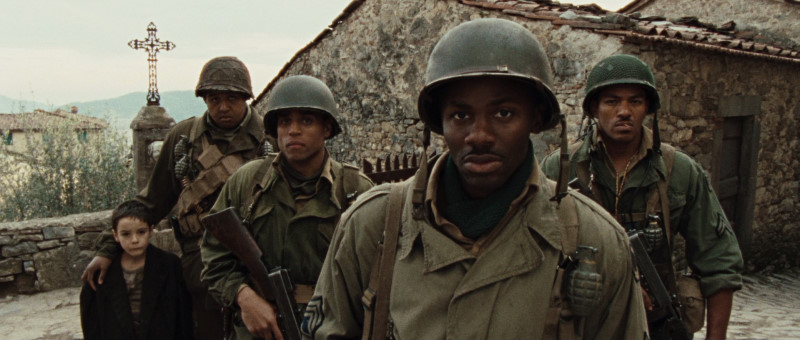
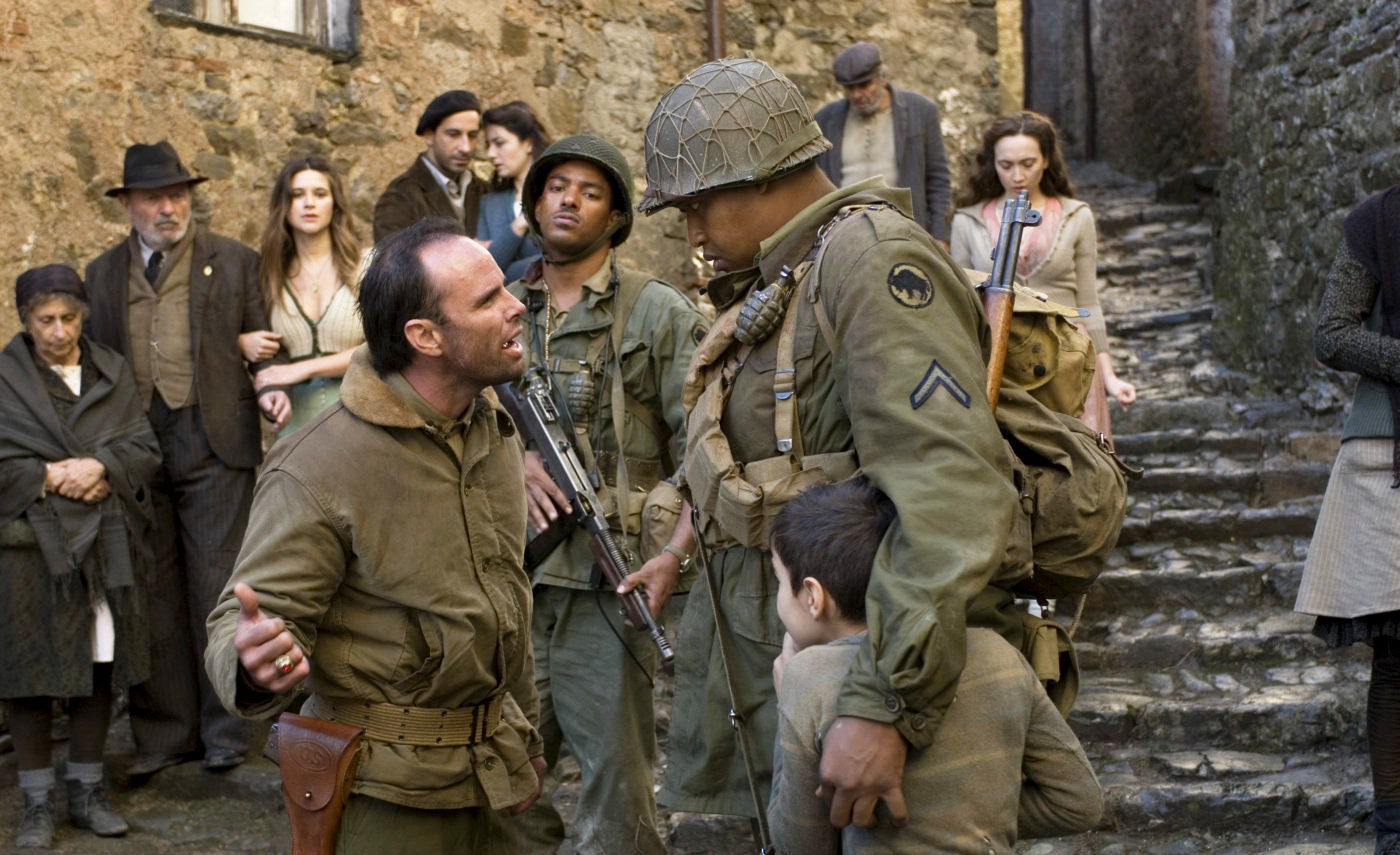
The two films I am going to be comparing and contrasting in this analysis are Inglourious Basterds and Miracle at St. Anna. Inglorious Basterds was directed and written by Quentin Tarantino and produced in 2009 by Lawrence Bender whereas Miracle at St. Anna was directed by Spike Lee, written by James McBride and produced a year earlier in 2008 by Roberto Cicutto, Spike Lee and Luigi Musini. They both have different production companies, the ones for IB being The Weinstein Company, Universal Pictures and A Band Apart and the ones for MASA being 40 Acres and A Mule Filmworks, On My Own, Rai Cinema and Touchstone Pictures. The budget for IB ($75 million) was significantly larger than that for MASA ($45 million) and this may be because Quentin Tarantino is a very successful director whose film has A-list actors such as Brad Pitt and Christoph Waltz so the box office returns are expected to be higher therefore meaning the film is given a larger budget. These expectations were correct and the box office for IB was $321.5 million whereas for MASA, the box office was lower than the budget and it came to $9.3 million which shows the production companies expected it to be much more popular than it turned out to be.  

Quentin Tarantino 

The work of Quentin Tarantino and Spike Lee definitely contrasts however, one of the main similarities I noticed within the films they have directed is their embedded themes, especially the themes of crime and violence and this is shown in many of their previous films. For example: in 1989, Spike Lee directed ‘Do the Right Thing’ which is about a hot summer’s day in Brooklyn in which a simple complaint at a restaurant causes racial violence to take place, resulting in the worse being brought out in everyone. He also directed ‘Inside Man’ in 2006 in which the narrative revolves around crimes, heists and hostage situations. In 1992, Quentin Tarantino directed ‘Reservoir Dogs’ which is about a jewellery heist that goes wrong and the surviving criminals suspect that one of them is an undercover cop. Tarantino additionally directed Kill Bill Vol.1 (2003) and Vol.2 (2004) in which ‘The Bride’ awakens from a coma after four years to discover her baby is gone so seeks revenge on a team of assassins who betrayed her and Vol.2 continues her quest. All of these films strongly explore the themes of crime and violence which shows it is something both directors like to embed into their work which they can then go on to re-present to their audiences based on their own perspectives. Of course, there are many differences between the work of Quentin Tarantino and Spike Lee. Tarantino’s films make very strong use of graphic violence, sometimes mixed with humour, blood and gore with a key theme of human suffering running throughout the majority of them whereas, Lee’s films deal with controversial social and political issues such as race relations, urban crime and violence. There has been a large controversy between Lee and Tarantino regarding Tarantino’s most recent film, Django Unchained (2012) in which Lee said he would not be watching it because it would be disrespectful to his ancestors and he quotes: “My ancestors are slaves. Stolen from Africa. I will Honor Them.”

 Spike Lee 

The shared genres for Inglourious Basterds and Miracle at St. Anna are adventure, drama, war, action and crime with IB having the additional genre of black comedy. Both films are set in World War II during a German-occupied Europe however they are based in different countries with IB being in France and MASA being in Italy. The narrative of Inglourious Basterds could be described as ‘fantasy like’ because it allows the Jews to get their own back on the Nazis which provides the audience with their desired outcomes to war. The film is split into chapters and it begins with “Once upon a time- in a Nazi occupied France” which I believe shows that Tarantino wants people to know that IB will be a fantasy film with WWII iconography. It is made up of two narrative strands which are taking place at the same time. Firstly, a group of 8 Jewish-American soldiers plan to sneak into France as civilians to kill Nazi leaders and carve a swastika into the heads of those they do not kill; one of the male protagonists, Lt. Aldo Raine (Brad Pitt) orders each of the eight soldiers to owe him one hundred scalps of dead Nazis. Secondly, a young Jewish refugee, Shosanna (Melanie Laurent) witnesses the killing of her family by the antagonist, Col Hans Landa (Christoph Waltz) and makes a tight escape at the beginning of the film. Four years later, she plans her revenge which is to burn down her cinema when a German movie premiere takes place and this premiere catches the attention of the eight soldiers (known as the basterds) meaning on that night, their paths cross to reveal a gripping ending.


Spike Lee on the other hand takes a completely different approach to World War II and wants to make it clear that African-Americans also fought in the war so his narrative revolves around four black American soldiers called Aubrey (Derek Luke), Bishop (Michael Ealy), Hector (Laz Alonso) and Train (Omar Benson Miller)-known as the Buffalo soldiers who are the survivors of crossing the Tuscany’s Serchio River which leads them into German territory. They become trapped in a Tuscan village which contains a boy named Angelo (Matteo Sciabordi), an attractive woman called Renata (Valentina Cervi), partisans that include a traitor and a local legend. The stories and brutal killings which take place in this village all link to why Hector shoots Rodolfo (Sergio Albelli) in a bank 40 years later which is shown at the beginning of the film.


One major difference I noticed in these two narratives is the protagonists. Inglorious Basterds has straight, white, middle-aged males for its protagonists which is typical of our dominant ideology and this may give audience the false idea that black people did not fight in the war whereas Lee took the opposite route by using four African-American protagonists to offer the audience a fair representation and being an African-American himself, it is not a surprise that he take a patriotic approach. IG seems to provide us with a negative representation of black people as only one is seen in the whole film (Marcel played by Jacky Ido) and he is the caretaker of the cinema which represents African-Americans as having a ‘weak’ and meaningless role during WWII. Contrastingly, Lee represents white people as racist and disrespectful because the Buffalo Soldiers are treated awfully, as if they are worthless. A similarity I noticed is the stereotypical representations of women in both films. Although the female protagonist in IB has a strong character because she is shown to be capable of burning down a cinema with little help which therefore portrays her as independent, the very first scene has a negative representation of women. It begins with a peaceful establishing shot of a farm and I feel this is excellent use of mise-en-scene because it draws the audience in as they are provided with realism and a relatable setting. We then see Perrier Lapadite (Denis Menochet) cutting at a tree stump with an axe, then it cuts to his wife hanging out the washing which portrays men as strong so have to do the ‘hard, manly work’ and women as domestic housewives who are less capable than men. In MASA, Renata is seen by Aubrey and Bishop as a beautiful woman and the two of them fight over her, mainly due to her looks so therefore she is being sexualised in the film to create the common themes of love, lust and sex. Her only purpose is to been seen as a sex object, who wears revealing clothes resulting in her being gawked at by the men in the film and by those in the audience. This negative representation of women is often seen in Spike Lee’s films and although he has tried to create a sense of equality in MASA, he has still not been successful in creating female equality (in my opinion).  


The themes and key sequences in both films really helped to confirm their main values and messages which I definitely see as contrasting. The themes in Inglorious Basterds are much more obvious and include revenge, death, war, violence, conflict, freedom, escape and secrecy whereas the themes in Miracle at St. Anna go slightly deeper and include innocence, conflict, revenge, war, betrayal, loyalty, humanity, sex, patriotism, underdog and death.  The shared themes of death, war and conflict are make clear through the goory, intense and hard-hitting combat scenes in both films, however I believe Tarantino has made them more explicit by showing everything ‘how it is’ whereas Spike has made them more implicit by making a stronger use of hidden meanings that make the audience think. For example, there is a scene when Train is being told to leave Angelo with Renata but he refuses to do so and although on the outside this shows how much he cares for him, on the inside it represents the inner conflict Train is having with himself regarding whether it is for the best if he keeps the boy. One of the soldiers then tries to grab Angelo and Train grabs and strangles him. This is a very key scene because the man’s face is perfectly in line with the sleeping man mountain and someone says “it’s the sleeping man” which implies that the spirit of the sleeping man lies within Train which is why he is so determined to protect and look after Angelo.


I believe the main themes in Inglorious Basterds are revenge and secrecy as it shows a ‘what if’ portrayal of war away from the battlefields and it shows what goes on ‘behind the scenes’. The beginning and end scenes strongly explore the theme of revenge and they help to link one of the messages of the Jews getting their own back and giving the Nazis what they deserved together. The beginning scene is extremely intense and this is enhanced by the flowing dialogue between Landa and Lapadite which engages the audience as they will have full focus on their conversation. This builds up to the goory and sudden shootings of Shosanna’s family and as she escapes, the audience understand that she will never forgive the Nazis for what they have done so will be keen to get her revenge. The very last scene clearly sums up the message of the Jews getting payback on the Nazis and it is clear that Tarantino has created a film that reflects how he wanted WWII to end. It ends with a low angle shot of Raine and one of his soldiers marking Landa with a swastika and this shot firstly represents their superiority so therefore portrays Jews as powerful and in control and the Nazis as weak and helpless. It secondly links the narrative back to the beginning scene in which Landa was the one in power so this juxtaposition is used to help Landa understand how he made the Jews feel. These messages are very different to what I believe is the main message being expressed in Miracle at St. Anna. I think Spike Lee only had good intentions and was trying to show that war is never good and violence is always wrong and I also think he is implying that war brings out the best and worst in people. It brings out loyalties and friendships and is reflected in the character of Hector who 40 years later, still remembers what his friends did for him during the war so wants to kill the man who gave them harm. However, war also brings out the worse in people as it dehumanises them when they are given the power of killing and they over-use the control they are given which results in people’s lives being destroyed.


Overall, I really enjoyed both Inglourious Basterds and Miracle at St. Anna as they both have strong and gripping narratives which drew me in. All of the performances were excellent and I felt very emotionally attached to the characters, especially in MASA in which Omar Miller’s performance stood out for me because his bond with Angelo was very touching and the performance that stood out for me the most in IB was definitely Christoph Waltz who’s cunning character helped to represent Nazis as truly evil and his role was very believable. Although the messages and values in MASA are more meaningful and heartfelt, I personally preferred Inglourious Basterds as I am a big fan of Tarantino’s style of film making and his fantasy based narrative helped me to find the film more entertaining. I would therefore give IB a rating of nine out of 10 and MASA a rating of eight out of ten and I would definitely recommend both of these films to friends and family. 

Sunday, 7 December 2014

The Selfish Giant Analysis


In this analysis, I am going to be focusing on how and why the director creates meaning by her use of themes and micro-features: cinematography, sound, Mise-En-Scene, performance and editing.

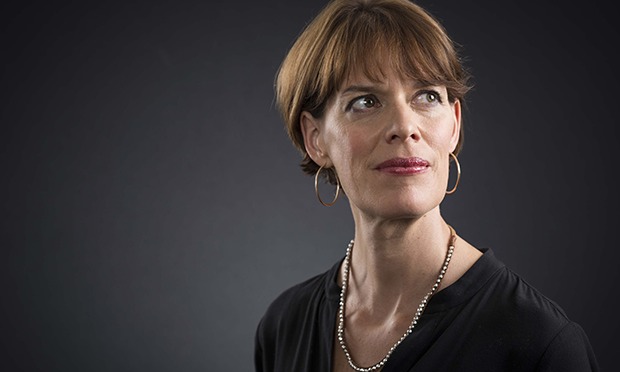
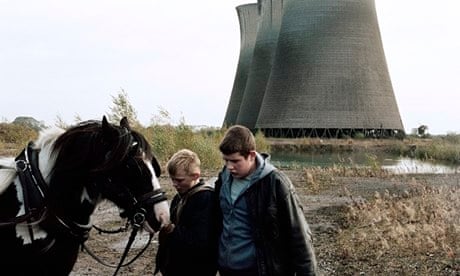
The Selfish Giant is a 91 minute, social-realism, crime drama directed and written by Clio Barnard and produced by Tracy O’Riordan. It was produced on the 25th October, 2013 in the UK. It is based upon a novel of the same title which was written by Oscar Wilde. Clio Barnard has also directed a film called ‘The Arbor’ which was filmed in Bradford which is the same filming location as The Selfish Giant. I personally believe that this film is aimed at teenagers who are aged fifteen and above because it is very intense and we are introduced to a vulnerable world, drowning in poverty, that we may not normally see or hear about and Clio Barnard does an excellent job of displaying the brutal realities of such a world and not at any point does she shy away from showing us these realities. The film stars Conner Chapman (Arbor), Shaun Thomas (Swifty- Arbor’s best friend), Sean Gilder (Kitten- the scrap dealer the two boys meet), Rebecca Manley (Michelle ‘Shelly’ Fenton- Arbor’s Mother) and Elliott Tittensor (Martin Fenton- Arbor’s older brother). It is about two thirteen year old friends, Arbor and Swifty, both from families struggling to make a living, who come across a scrap dealer named Kitten and from there on, get involved with the dangerous life of scrap-dealing in order to provide money for their families, which, towards the end, leads to tragic consequences.

Clio Barnard

(Spoiler Alert) The film has the themes of: family, friendship, class, desperation, determination, theft, greed, anger, betrayal, jealously and survival.  Arbor is greatly dependent on his tablets that help to prevent his outbursts. The audience realise that he has to take medication when his Mother asks him “have you taken your tablet?” during an argument in which Arbor is becoming extremely angry, which suggests that he quite probably has ADHD. Family is a theme because deep down, Arbor clearly has a very close relationship with his Mother and Clio Barnard shows this by the meaningful scenes which feature them hugging and comforting one another. Also, it becomes known that Arbor and Swifty’s main priority is to earn money in order to support their financially deprived families and the audience realise this in a scene during the earlier stages of the film in which the two boys earn quite a large amount of money and instead of spending it on themselves, they plan to spend it on the electricity bill and a new sofa, which was very un-selfish of them. This therefore confirms that the title ‘The Selfish Giant’ does not refer to either of them but in fact is referring to Kitten because all he wanted was to make a large profit from the scrap the boys were collecting and he was not at all concerned about the extreme danger they were both put in. Arbor and Swifty have a very strong friendship and the audience discover this almost immediately in the opening scene in which Swifty is calming Arbor down and a close up is used to show their hands interlocked. Clio Barnard purposely used this shot to represent the tight bond between the two of them and their hands stay interlocked to show how they will always be there for one another which gives the audience false hope that they will stay together throughout the film and will not leave each other’s side. As the film develops, Swifty takes a great interest in horses and appears to be very natural when handling them whereas Arbor does not share this talent and is more interested in collecting as much scrap as possible. Kitten then begins to favour Swifty because of this, leaving Arbor feeling betrayed and jealous. There was a particular shot that stood out for me which displays these themes which is a wide shot of Kitten and Swifty standing next to one another as Arbor is stood away from them, Barnard included this shot in the film to represent how Arbor feels as if he is being torn apart from them because ‘he is not good enough’, despite how hard he tries. Arbor then becomes more and more greedy and desperate to make money and dangerously steals scrap including off Kitten himself which gets him into a large amount of trouble and he is threatened to have his hands put through the wire cutting machine. The Selfish Giant does not focus on Arbor and Swifty trying to escape from the poverty they are surrounded by, like the protagonist in ‘Fish Tank’, but it focuses on them trying to survive in such an economically demanding world.


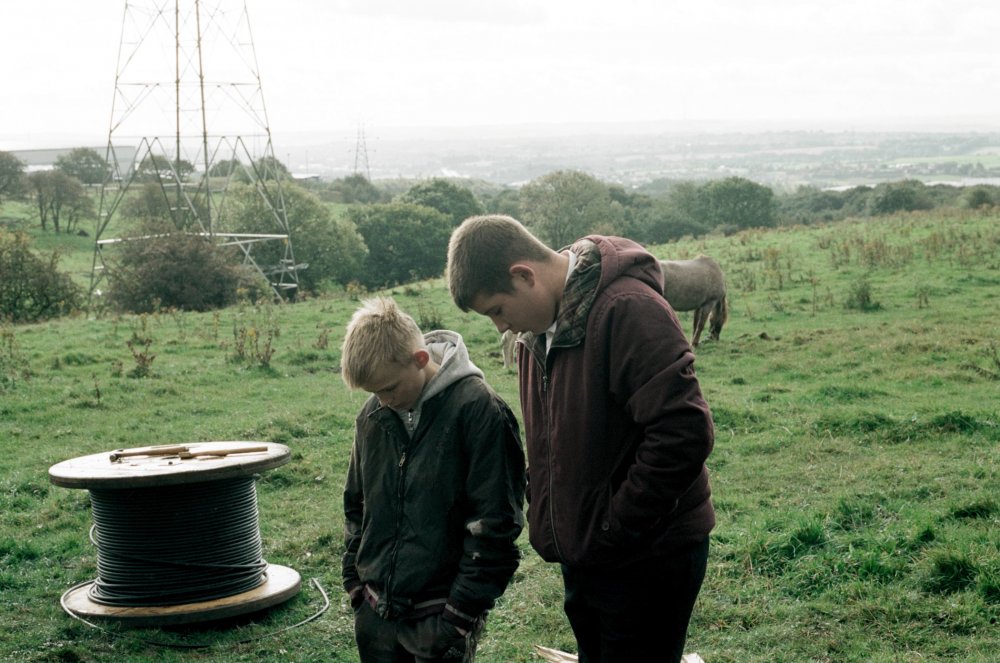
Throughout ‘The Selfish Giant’, I noticed that there were many still, long-lasting establishing shots of the countryside which showed sheep and horses. This was an area that appeared safe and peaceful, in which the protagonists could escape to in order to be away from the rough, loud, urban environment they were forced to survive in. However, after these establishing shots, the camera would suddenly cut to the shots showing the scrap yard and the noisy, dangerous machines within it which dramatically contrasted with what the audience previously saw. I personally believe that this was to show how working in a scrap yard was extremely risky and dangerous and to emphasize how the way in which Arbor and Swifty made money to support their families was not pleasant at all. Clio Barnard may have used this contrast to clearly separate our expectations from the realities: we expect that thirteen year old boys, like Arbor and Swifty, to be attending school and living a peaceful life in which they feel safe and have a sense of belonging; these expectations are shown by the establishing shots of the countryside. However, in reality, Arbor and Swifty are constantly putting themselves into large amounts of danger in order to support their families and the only place they feel as if they ‘belong’ to may be the scrap yard in which they work in because they were excluded from school and have quite an un-settling family life. Barnard makes it clear that they do not lead the ‘ordinary’ life that is expected of them so keeps the narrative ‘real’ the whole way through to inform the audience that there are no ‘happy endings’ in such a poverty and danger-driven world. I also believe that the establishing shots were used in order for the audience to reflect on what had happened because they were usually shown after an event had occurred and Clio Barnard clearly did not want to cut straight into another ‘busy’ scene and instead wanted to give the audience thinking time. Additionally, there was foreshadowing of the ending by the use of the shots which showed the electricity wires and this was maybe to inform the audience that a key event was going to take place there although when Swifty was electrocuted when helping Arbor to steal underground cable, it was very unexpected and the audience may not have expected such a brutal ending to their friendship.


I thought that Mise-En-Scene played an important role in the film and I thought that the use of weather was very clever. Throughout the majority of the film, the weather was dull and gloomy; the days were rarely sunny, giving the impression that it was quite cold. This was to represent how the protagonists did not lead a ‘blissful’ life but the complete opposite as they were constantly surrounded by negativity. After Swifty passed away, the weather gradually got worse and Arbor is shown sitting outside Swifty’s house in the pouring rain which can have many interpretations. Firstly, Clio Barnard has made use of the rain to represent how Arbor can never have a bright or happy day again now Swifty has disappeared from his life and the rain is a symbol of Arbor’s immense sadness so he is reflecting on what has happened. Secondly, Arbor is constantly outside Swifty’s house in the rain because he feels guilty and is blaming himself entirely for his death. Another key symbol throughout the film is the horses which are often shown being used for the benefit and entertainment of others and are put into extremely dangerous situations such as horse racing on busy roads. I believe that this represents how Kitten was using Arbor and Swifty for his own benefit because he was willing to put them in large amounts of danger in order to make money for himself and to support his scrap-dealing business.


The performances were truly stunning and incredibly believable and the performance from Conner Chapman, who played Arbor, really stood out for me because he was very natural and his acting did not seem at all forced. The scenes in which he was hugging his Mother were very emotional because it showed how much he cared for her and it is almost as if he is taking on the role of a Father because he is looking after her and trying his up-most hardest to support her. My favourite scene was the one towards the end of the film in which Arbor is lying underneath the bed, just like at the beginning, but instead, his older brother is talking to him rather than Swifty. However, it then shows Swifty in the same place he was in during the opening scene because Arbor is remembering him which emphasizes how much he misses him. There is then the same close up which shows their hands interlocked but this time, they let go and Clio Barnard purposely did this to represent how Swifty has left Arbor and is no longer there for him. There was very limited dialogue during this scene and the ones that followed it because the performances and cinematography were more than enough to create meaning and it also gave the audience time to reflect on the film.


Overall, I really enjoyed ‘The Selfish Giant’ because it was gritty, realistic and kept me gripped the whole way through. The narrative was strong, believable and reached a dramatic and unexpected climax at the end. The micro-features within the film were outstanding and I believe that Clio Barnard has created a fantastic and meaningful piece of work. 

Tuesday, 2 December 2014

The Selfish Giant Analysis- First 10 Minutes


The Selfish Giant is a 91 minute, social-realism, crime drama directed and written by Clio Barnard and produced by Tracy O’Riordan. It was produced on the 25th October, 2013 in the UK. The ten minute extract of the opening scene stars Conner Chapman (Arbor), Shaun Thomas (Swifty- Arbor’s best friend), Sean Gilder (Kitten- the scrap dealer the two boys meet), Rebecca Manley (Michelle ‘Shelly’ Fenton- Arbor’s Mother) and Elliott Tittensor (Martin Fenton- Arbor’s older brother).

The extract is about two thirteen year old friends named Arbor and Swifty who, on one late night, discover a scrap dealer named Kitten after stealing a cable of wire from two men on a train track. The extract mainly focuses on the relationship between Arbor and Swifty and also the relationship between Arbor and his Mother and older brother, Martin meaning the audience is able to gain an understanding of his home life as well as his personality. The themes of: family, friendship, hate, conflict, anger, dependence, class and crime are expressed within this extract. The theme of family is displayed because the audience are able to discover more about the argumentative relationship Arbor has with his Mother and Martin and it is clear that they do not get on very well, possibly because the Mother is struggling to raise them both in a working class environment. Friendship is shown between Arbor and Swifty and Swifty has the ability to easily calm Arbor down when he is having one of his rages which shows that he must have known him for quite a long time as Arbor will generally follow what he tells him, emphasizing the trust between them. In a way, Arbor is dependent on Swifty in order to keep him under control however; he is also greatly dependent on his tablets that help to prevent his outbursts. The audience realise that he has to take tablets when the Mother asks him “have you taken your tablet?” during an argument in which Arbor is becoming extremely angry, this also suggests that he has serious anger problems and possibly ADHD. Crime is a major theme because Arbor and Swifty have to live in an environment that is surrounded by crimes such as scrap dealing and they cannot help but find themselves intertwined with this crime in order to provide much-needed money for the family.


The Mise-En-Scene within this extract was very effective and it gave the audience a clear idea on the environment Arbor had to live in. The scene set in the kitchen showed a room which was extremely cramped and of a low value, without fancy and modern-looking utensils and with only the basics such as a washing machine and a kettle. This emphasizes the fact that they are working class because it shows their poor living conditions and quality of life. Arbor and Swifty were shown riding on a horse during the night-time which shows that they lead an un-ordinary and dangerous lifestyle because it is not something you are likely to see and it also shows that they have both clearly had a poor up-bringing and do not like spending time at home which is the reason they go out at night. They are seen wearing clothing such as tracksuits that are not of a very high quality which shows how the family do not earn very much money so cannot afford to wear expensive clothing.


There is one particular scene that stood out for me during this extract and it is the scene in which Arbor presents his Mother with the money he earned from the cable wire. When Arbor shows his Mother the money, she seems quite angry and asks him where he got it from to which he responds: “I worked me ass of yeah, for this, for you yeah”. This results in a loud, disruptive argument between the two of them which is an argument that is very likely to occur between a husband and wife. This implies that Arbor is taking on the role of the Father which suggests that Michelle is a single Mother who may well have had a very bad relationship with the Father of Arbor.

The opening scene made very good use of cinematography and sound and it shows Arbor having a rage as Swifty is attempting to calm him down. The audience can hear loud, thumping noises and the sound of shouting which expresses emotions such as anger and frustration therefore meaning that tension is created because the audience do not know why he is so angry so it is a very dramatic way to begin the film. Dark lighting is also used to create mystery and to show that something has gone wrong because the cause of Arbor’s outburst is unknown. During this scene, a close up is used to show Arbor and Swifty’s hands interlocked and this shot is used to represent their friendship and their extremely close bond that they share with one another. Another example of when sound is used effectively is throughout the film when Arbor is constantly swearing which is not appropriate for someone of his age. He has clearly been influenced by those around him, especially his older brother who is often seen swearing and it shows that your language and behaviour is usually affected by those you spend a lot of time with and those who are supposed to be your role models and within this extract, Martin is one of the only ‘role-models’ that Arbor has. The dark lighting during the train-track scene was used to show that the men there, who originally had the cable of wire, were being very secretive as they were committing a crime and therefore they did not want to be noticed by anyone. When Arbor and Swifty discover Kitten, a low angle shot is used to show Swifty on the horse which shows how he feels more in control when on one and therefore he is displaying superiority because he is ‘looking down’ on everyone else as they look up at him.


Overall, I really enjoyed this short extract because without even watching the film, I was able to gain an understanding of the characters, especially Arbor, and the environment they are forced to live in. It was a very strong opening scene with clear themes, brilliant Mise-En-Scene and effective cinematography which has made me want to watch the film as I feel very ‘drawn in’ by this extract. 

Saturday, 22 November 2014

My Brother The Devil Analysis


My Brother The Devil is a social realism drama film which was produced on the 9th November 2012 in the UK and filmed in Hackney, London. It was directed and written by Sally El Hosaini who is also known for her work on Green Zone and The Fifth Bowl. It was produced by Julia Godzinskaya, Gayle Griffiths and Michael Sackler. The film has a running time of 111 minutes and it has been classified as a fifteen due to sex, nudity, violence, gore, profanity, alcohol, drugs and smoking. My Brother The Devil stars James Floyd (Rashid- the older brother), Fady Elsayed (Mo- the younger brother), Anthony Welsh (Izzi), Amira Ghazalla (Hanan) and Saïd Taghmaoui (Sayyid). 

My Brother The Devil is about two brothers, Rashid and Mo, who are British Arabs being brought up by an Egyptian family and the effect that crime and gangs have on their relationship. Mo looks up to and respects Rashid however Rashid does not want Mo to follow in his footsteps and would prefer him to focus on his education because Rashid leads a gang and finds himself caught up into the world of drug-dealing.; a situation he does not want his younger brother to be involved in. Despite this, Mo ignores Rashid’s requests and also becomes a drug dealer as well as becoming under the influence of alcohol and drugs.


The narrative of this film fits in well with Robert McKee’s theory, named ‘story’, which states that a narrative consists of five main stages: inciting incident, progressive complication, crisis, climax and resolution. The inciting incident in my brother the devil is when Mo gets threatened by Demon and his gang and ends up having his shoes stolen from them. It is from this point that the film begins to truly develop because it causes conflict between Rashid’s and Demon’s gangs meaning the life of the main protagonists is changing in order for them to adapt to the plot. The progressive complication would be when Mo catches sight of Demon’s gang outside a local newsagent and in desperation, calls Rashid because he is in fear that he will be spotted and get attacked by them. This leads to Rashid and his gang confronting Demon’s gang and an intense fight breaks out almost immediately. The crisis occurs when Rashid’s best friend, Izzi gets stabbed during this fight and very sadly ends up passing away. I believe that this scene was purposely used in order to show to the audience the brutal realities of gang crime and the impact it can have on someone’s life, even when they least expect it. The film reaches a terrifying climax very close to the end when Rashid wants to get revenge on Demon’s gang, using a gun, and Mo accidently gets shot in the shoulder. This shocked Rashid to a great extent as he realised how close he was to losing his only brother so he makes the decision that everything has to change and he must re-think his actions. The resolution occurs when Mo and Rashid talk to each other alone, resulting in their friendship being restored and both of them having more peace and stability in their life.


Todorov’s narrative structure theory also fits in well with the narrative of my brother the devil. His theory also has five stages which are: equilibrium, disruption, realisation, repair and return. The equilibrium is when Rashid is congratulating Mo on his exam results and encouraging him to continue with his studies; there are no current conflicts between the two main gangs.  The disruption is when Mo gets his shoes stolen from him. It is after this event that the fight occurs between Rashid’s and Demon’s gangs which leads to the death of Izzi. Rashid then comes to the realisation that what he is doing is wrong so begins to have a re-think on how he should be spending his life. The situation is repaired when Rashid meets a photographer named Sayyid and begins to work for him. However, the narrative structure returns to a disruption when Rashid has a sexual awakening and when Mo discovers this, he realises that he has to face his own fears in order to protect Rashid and himself. This however, does not lead to the return of a new equilibrium and instead results in another disruption which is when Mo gets shot in the shoulder. The realisation of this is when Rashid understands that what he is doing is wrong and that there must be a change. Rashid repairs the disruption of the equilibrium by talking to Mo alone which leads to balance and peace being restored within the family therefore meaning the narrative has returned to a new equilibrium.


There is a wide variety of very strong themes displayed throughout this film which are: family, friendship, protection, control, violence, crime, hate, love, lust, betrayal and revenge. The themes of family, friendship, love and hate are the most obvious and they are clearly shown between Mo and Rashid because although they have a big fall out in the film and claim to hate one another (“I wish you weren’t my brother”), they still love and care for each other nonetheless and at the end, they become friends again. Protection and control is shown through Rashid because he does not want Mo to lead the same life as he does and therefore demands him to focus purely on his studies. Protection is displayed when Mo frantically calls Rashid when he spots Demon and his gang outside a shop. Rashid drives to where Mo is extremely quickly and confronts Demon in order to reduce the chances of Mo getting attacked. Violence and crime are expressed throughout the entire film during events such as gang fights and drug dealing. I believe that betrayal and revenge are two of the most important themes because they play a very big part in the plot. Mo feels as if he has been betrayed by Rashid when he rethinks his life plans after Izzi passed away and begins to work for Sayyid. It is this disruption and realisation that eventually leads to Mo coming very close to death. Revenge is shown when Rashid wants the final act of violence between Demon’s gang and his own and decides to use a gun to do so. It is this act of revenge that also leads to Mo being shot meaning that without the themes of betrayal and revenge, the plot would not have been able to reach that unexpected climax.


Mise-En-Scene was used effectively in order to create an urban environment which is very rough. The characters lived in an estate and this was clearly shown by the many establishing shots of towering, crowded flats. The flats were crowded and very close together to represent how the brothers, no matter how hard they tried, could not escape the crime that surrounded them and they constantly found themselves involved in situations such as gang fights.  The small details such as graffiti on the walls enhanced the idea that the characters lived in a rough, run-down area and the characters would quite often be seen wearing costumes such as hoodies in order to blend in, stay out of the way and keep a low profile at times when they did not want to be easily noticed. Additionally, the protagonists having to live a life surrounded by crime and violence was highlighted by the use of props which included weapons such as knives and guns and other props such as alcohol, cigarettes and drugs. Mo felt pressurised to make use of these props in order to ‘fit in’ and be just like his older brother.

The cinematography was absolutely outstanding and the beautiful still shots made Hackney seem like a better place than it really is, possibly to represent how the protagonists wanted a better life for themselves. However, these still shots were almost tilted and not perfectly straight to represent how neither of the protagonist’s lives were completely stable. There were also a lot of moving shots, for example, when a character drank some alcohol, the camera would move upwards as they tilted the bottle upwards, which made the sequence more realistic and also more interesting to watch. I noticed that at times, slow motion camera action was used which allows the audience to see the action that is taking place in more detail. The frequent over the shoulder shots meant the audience could feel more involved with what was happening and during fight scenes, point of view shots were used which enabled the audience to be put in the characters shoes in order to feel as if they were actually there. The use of low angle shots showed that the character had power and dominance and therefore is in control and is more superior than the other character(s) who is in turn portrayed as weaker and more vulnerable.


The use of lighting was very effective throughout my brother the devil. Firstly, dark lighting was used when a character was trying to be secretive, for example, in the scene where Rashid sneaks a girl into the house at night to have sexual intercourse with her, the lighting is very dark and this is to represent how he does not want anyone in the house to see them which in turn, conveys mystery. Also, I noticed that when Mo and Rashid are together at the beginning and end of the film, the lighting is brighter than it is during the scenes in which they have fallen out. This is to symbolise their friendship as brothers and that when they are together, they immediately feel safer and much happier; this bright lighting is not used so often during the scenes in which they have fallen out to represent how their relationship has been torn apart.

I believe that non-diagetic sound was used very creatively in order to create meaning. Music was used to fit the tone of the atmosphere which in turn helped to make it more believable, for example, dramatic music was used during intense scenes to leave the audience on the edge of their seats, wondering what was going to happen next. A scene I clearly remember that used sound artistically was when Mo asked Hanan what music she was listening to and she gave him the headphones to listen for himself. When he put the headphones on, the music that the audience could previously hear very quietly became a lot louder and the surrounding sounds were muted out. This meant the audience were put in Mo’s shoes and therefore were able to hear what he could hear, making the scene more realistic and life-like. Additionally, throughout the film I could often hear police sirens in the background which emphasizes how Hackney is a very rough area with extremely high crime rates.


The performances were excellent because they were very natural so did not seem forced at all. They were all extremely powerful meaning it was easy for the audience to engage with each character, especially the main protagonists, Mo and Rashid, who Fady Elsayed and James Floyd did a brilliant job of playing. I have not seen Elsayed and Floyd act in any other films apart from my brother the devil so I was not expecting such outstanding performances to which there was very little fault.

From near to the middle of the film and onwards, the plot developed strongly and it became clear that Mo and Rashid were going opposite ways in their lives; parallel editing was used to show this. There were certain scenes that showed what the two brothers were doing at the same time via parallel editing in order to show their different stories and also to represent how although they have been torn apart, they still think about one another constantly. The use of parallel editing was very clever because it created intensity and added more creativity and interest to the scenes it was used in.

I think that the film is called ‘my brother the devil’ because Mo did not obey Rashid’s request which was to focus purely on his education and to not get involved with gangs, drugs and alcohol therefore, he was being rebellious so is being referred to as a ‘devil’.  Overall, I really enjoyed my brother the devil because it is a gritty film with miraculous cinematography, stunning performances and strong themes. Each character was very well developed and I was kept intrigued the whole way though; an outstanding film that I would highly recommend to anyone.