Showing posts with label Reviews. Show all posts

Tuesday, 13 October 2015

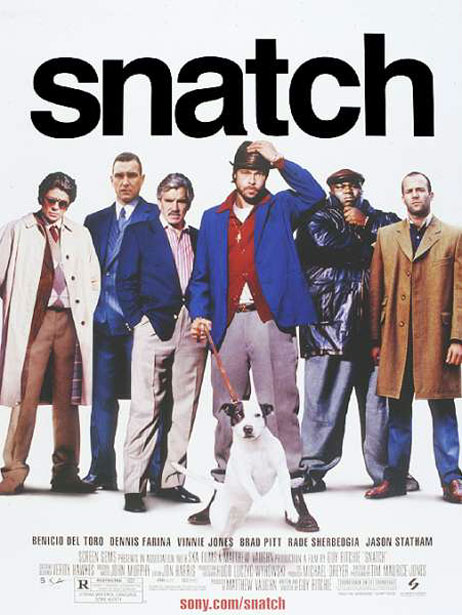
Snatch Review


Snatch is a comedy, crime film directed and written by Guy Ritchie and produced in 2000 by Matthew Vaughn with Columbia Pictures Corporation and SKA Films. Since Snatch, Ritchie has directed 6 feature films: Swept Away (2002), Revolver (2005), Rock n Rolla (2008), Sherlock Holmes (2009), Sherlock Holmes: A Game of Shadows (2011), The Man From U.N.C.L.E (2015) and he is currently filming Knights of the Roundtable: King Arthur for 2016. These films all have in common the genre of crime and therefore share themes such as money, status and power, showing that this is what Ritchie possibly feels comfortable working with. Guy Ritchie's first film: Lock, Stock and Two Smoking Barrels (1998) is very similar to Snatch regarding its style, plot, setting, themes and characters and Robert Ebert said Snatch "follows the Lock, Stock formula so slavishly it could be like a new arrangement of the same song".

In Snatch, the music was by John Murphy, the Director of Photography was Tim Maurice, the editor was Jon Harris and production design was by Hugo Luczyc-Wyhowski. Regarding its critical and financial reception, Snatch was very successful, grossing a total of $83.6 million after having a budget of $10 million and it was rated 8.3 on IMDb. It won five awards: Empire awards for the Best British Director and Best British Actor (Vinnie Jones), a Golden Reel award for Best Sound Editing and a special recognition for excellence in filmmaking. I personally feel that the film was worthy of more than five awards, especially regarding the performances because for me, they were all excellent and this was one of the main strengths of the film which secured a solid and enjoyable viewing.


Starring Alan Ford (Brick Top), Brad Pitt (Mickey), Jason Statham (Turkish), Stephen Graham (Tommy), Benicio Del Toro (Franky 4 Fingers) and Vinnie Jones (Bullet-Tooth Tony), Snatch is a fantastic, wild, event-packed film, full of conflict, deceit, brutality and intimidation that is bound to hold your attention for the entire duration. Full of hilarious one-liners and fantastically well developed characters, Ritchie has created an exceptional piece of work. Snatch is made up of a multi-strand narrative with two main intertwined plotlines: Brick Top pulls Turkish and Tommy into the world of match fixing. Their original boxer gets badly injured by Irish gypsy, Mickey after Turkish wants to buy a caravan from the gypsies. Turkish and Tommy have to convince Mickey to fight and lose for them. At the same time, a massive diamond heist is taking place and as more characters enter the equation, even including a dog, things go from bad to worse and the money and guns becomes the main focus point.

I am a huge fan of cinematography and Snatch is definitely an example of very effective camera-work and with the incorporation of slow motion, stills, unique angles, black and white and colour shots, the audience's focus is kept maintained and they are drawn into this bizarre narrative, given them a sense of escapism from their reality. The opening title sequence was truly incredible and it was a great way to immediately draw in your audience and create a buzz that will intrigue them to continue watching. As you can see in the video below, this sequence features quick-paced editing which goes from action to freeze frame, introducing the protagonists one by one and giving the audience a small insight into their characteristics and possible personality.

Triangle8TiedUp


There were many key scenes throughout Snatch but my favourite two were: meeting Sol and Vinnie's driver: Tyrone and Brick Top's pig story. I personally found the Tyrone scene hilarious as it was an expression of the characters inner personalities and we see the three men in a more relaxed environment, meaning we as an audience can gain a connection with them due to the more light-hearted tone. Brick Top's pig story is another one of my favourite scenes, firstly because it was very unexpected and I believe this sums up the film because every small section of the narrative comes with new surprises and I had no idea what to expect throughout. Secondly, I believe it holds an implicit meaning to what it appears on the outside. Brick Top refers to feeding dead bodies to pigs and I believe the reference to pigs is meant to represent and symbolise the other characters because they gradually turn more and more greedy in terms of wealth, money, status and power.

In conclusion, I loved Snatch because it had absolutely solid performances from all of the characters which resulted in an entertaining experience that although was definitely very confusing at times, held my attention throughout and I would recommend it for sure. However what disappointed me about Snatch was the lack of  strong, female characters as all of the protagonists were male and the exclusion of the female gender shows women to have less importance than men so I would have like to have seen some important females being thrown into the mix.  I now feel inspired to watch more of Guy Ritchie's films and I would rate Snatch 8.5 out of 10!

Friday, 9 October 2015

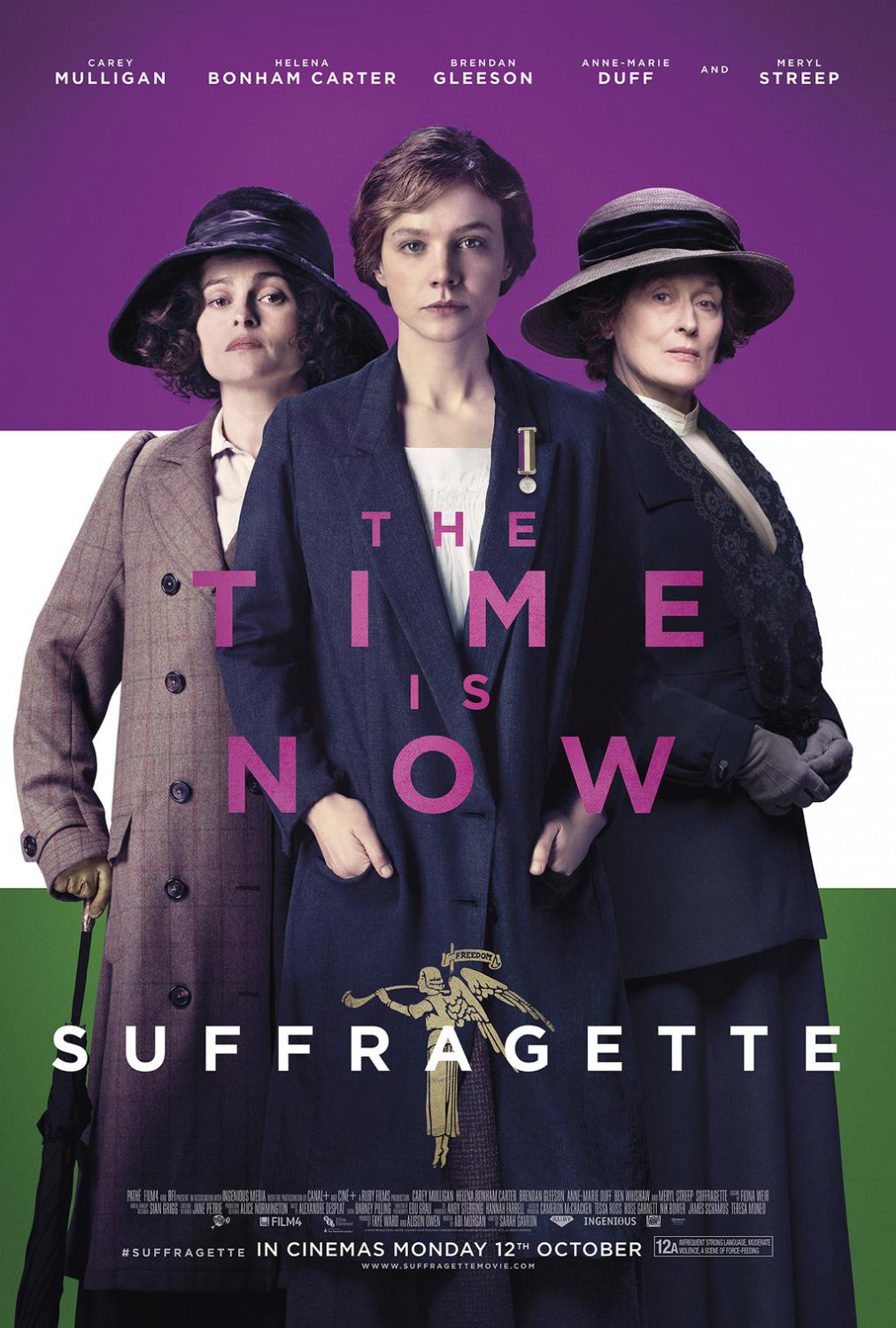
BFI Film Festival- Suffragette


Embedded image permalink

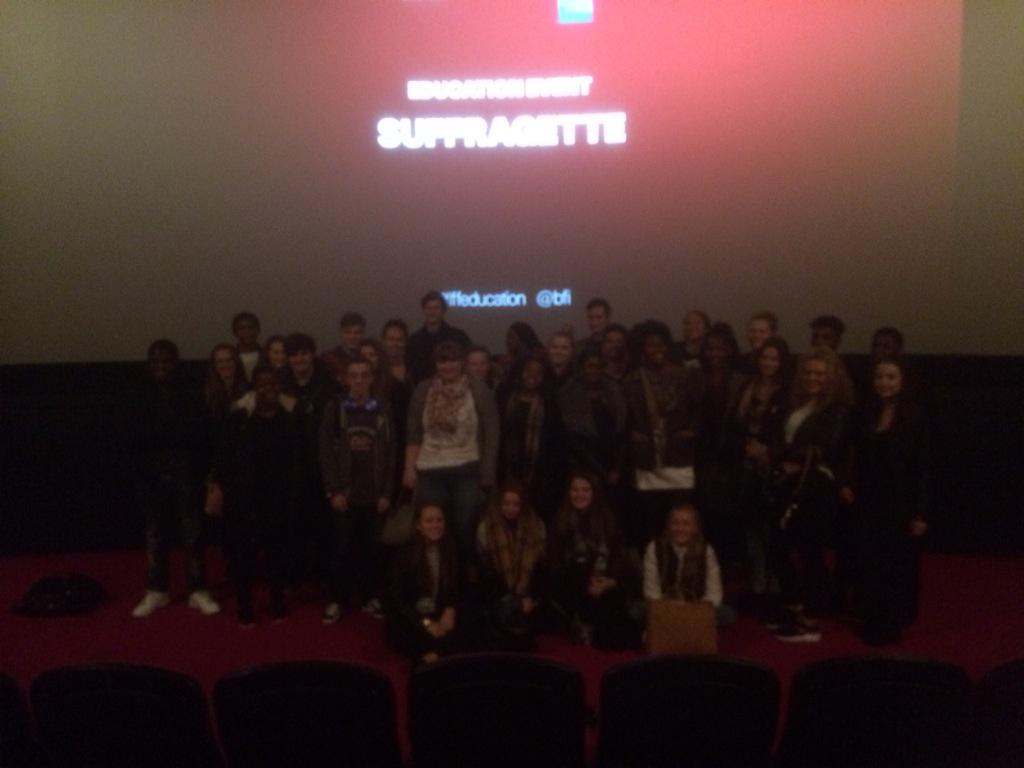
On Friday 9th October, I went with my film class to watch a screening of Suffragette at the BFI Film Festival in London. I really enjoyed the experience because the producer gave a short question and answer at the end of the film which gave me an insight into the production of Suffragette and the film-makers intentions behind it. At multiplex cinemas such as Vue in Croydon, there are no opportunities to meet those involved in making the film and the Arthouse experience was therefore much more inclusive and there was a completely different atmosphere regarding the room’s layout and also its audience who were clearly more serious about film, highlighted by the round of applause at the end which does not often happen in multiplex cinemas.

Suffragette was directed by Sarah Gavron, written by Abi Morgan and produced in 2015 by Alison Owen and Faye Ward with Ruby Films, Pathe, Film4 and Ingenious Media. Sarah Gavron is not a widely known director and she has previously directed only one feature film: Brick Lane (2007) which follows the life of a young, Bangladeshi woman. It made $1,095,398 in the box office and received a rating of 6.7 from IMDb. Gavron has also directed two short films: Losing Touch (2000) and The Girl in the Lay-By (2000), one documentary: Village at the End of the World (2012) and one TV Movie: This Little Life (2003). Due to Suffragette still being in its exhibition stage, the box office is currently unknown but I believe it will top Brick Lane purely because it has been hyped in its sales and marketing stages and I have seen various articles on it in mainstream newspapers such as The Times and also advertisements on buses. Additionally, there is also controversy surrounding it which has been on the news: during its premiere, feminists protested on the red carpet and they were chanting “dead women can’t vote” which is likely to draw more attention to the film, therefore attracting a wider audience and grossing a larger amount of money.


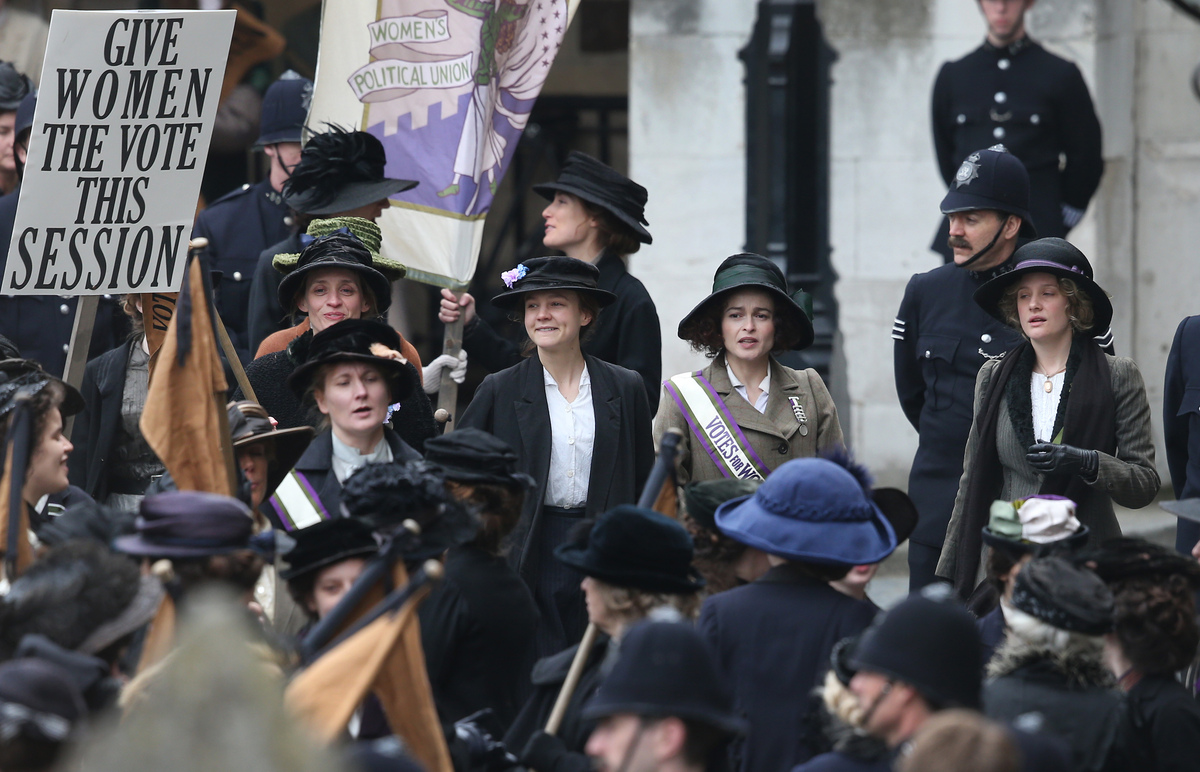
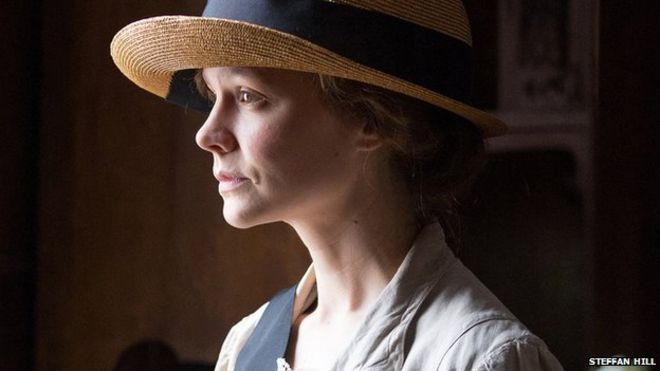
The music was by Alexandre Desplat, the director of photography was Eduard Grau, the editor was Barney Pilling and production design was by Alice Normington. Suffragette stars Carey Mulligan (Maud Watts), Helena Bonham Carter (Edith Ellyn), Anne-Marie Duff (Violet Miller), Ben Whishaw (Sony Watts), Natalie Press (Emily Wilding Davison), Adam Michael Dodd (George Watts) and Meryl Streep (Emmeline Pankhurst). As the title quite rightly suggests, Suffragette is about the feminist movement and how the women who fought peacefully for the right of their vote achieved nothing so had to resort to violence and suffering just to get their voices heard. The narrative revolves around the story of our main protagonist, Maud Watts and how her experience in the movement affected her family and personal life. (Spoiler alert) However, I did not personally like the way in which the narrative was structured because although the film was supposed to be about Maud’s story, they did not finish it and instead it ended on the tragic death of Emily Wilding Davison which meant the audience were not able to gain knowledge on how Maud continued to protest and what happened to her Son. Also, Maud’s character is fictional whereas many of the other characters are based upon real suffragettes and I feel the protagonist should not have been fictional because this is a very serious topic and the audience should be educated on the stories of real suffragettes who fought for women’s rights in order to gain a greater understanding of the movement and also to enable a stronger connection with the main protagonist.

The cinematography in Suffragette was very effective and there was a strong sense of surveillance throughout. This was achieved through the use of extreme close ups such as when Maud’s boss is talking to her at work and these are very intimate and intense, making the audience feel as if they are listening in on their conversation. This use of surveillance meant the audience were also able to connect and understand the characters because we were watching over their personal lives and as the producer mentioned in the Q&A, the crew intended for the audience to feel as if they were there in that period of time. Another way this was illustrated through the cinematography was the handheld, shaky camera movement during the riot scenes which was supposedly from one of the characters perspectives, providing the audience with a realistic reflection of what it was like to be a woman protesting for their rights during the Suffragette movement.  


The protagonist, Maud was clearly hugely passionate about achieving the rights for woman to vote and she was willing to give up anything in order to fight and protest for this cause. This was highlighted by the scene in which she discovers her son, George is going up for adoption and she has a very short amount of time to say her goodbyes to him. Although she is extremely upset about leaving him and screams as he is taken away from her, she does not resist entirely and understands that if she wants to continue protesting, she would have to give George up. I thought this was one of the more emotionally touching scenes in the film because the audience gain an understanding as to how much woman’s rights really mean to Maud and therefore how serious this movement really was. However as I mentioned earlier, the film-makers did not continue Maud’s story and we never found out what happened to her or her son and this uncomplete narrative was disappointing and left the audience hanging, but not in an effective way.

I was impressed by the production design in Suffragette because the producer mentioned that it was very hard for their team to re-create nineteenth century England and at times, they would have to film during the night and early hours of the morning in order to not cause any disruptions. I believe their hard work really payed off because I felt transported to that century and the mise-en-scene was very realistic so I applaud the head of production design, Alice Normington and her crew.


In conclusion, I did enjoy watching the film however I had much higher expectations for it and unfortunately, it really disappointed me. The Suffragette movement was huge and it is a very important part of our history and I feel the film failed to show how aggressive yet powerful it really was and the film-makers seemed to shy away from the brutal truth and hide away with a ‘safe’ narrative. In my opinion, it was unable to illustrate the incredible passion that went into this movement and I expected to be extremely emotionally moved by it but instead, I was left with a sense of annoyance because they did not give the Suffragettes as much justice as they should have and this had the potential to be an incredible film. However, the performances were solid and it was good to see a strong, female cast rather than mostly male protagonists. Overall, I probably would not recommend this film and I am rating it 5 out of 10. 

Saturday, 28 February 2015

The Grand Budapest Hotel Review


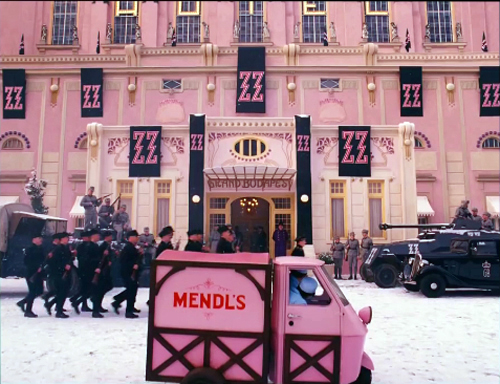
The Grand Budapest Hotel is an adventure, comedy and drama film directed and written by Wes Anderson and inspired by the writings of Stefan Zweig. It was produced by Wes Anderson, Jeremy Dawson, Steven Rales and Scott Rudin on March 7, 2014 with a running time of 100 minutes. The film has been very successful and it won four Oscars, one Golden Globe and five BAFTA’s along with receiving 127 nominations across a variety of award ceremonies and 95 awards in total. Wes Anderson is also known for directing films such as Moonrise Kingdom, Fantastic Mr. Fox, The Darjeeling Limited and The Life Aquatic with Steve Zissou.  Starring Ralph Fiennes (M. Gustave), Tony Revolori (Zero), F. Murray Abraham (Mr. Moustafa), William Dafoe (Jopling) and Adrien Brody (Dmitri), The Grand Budapest Hotel is a stylish, beautifully shot film, showing the past adventures of Gustave, a concierge at a famous hotel and Zero, the lobby boy, which took place between the first and second World Wars. It explores the development of their friendship and how they worked their way through different obstacles together.


The cinematography and editing definitely stood out for me the most, with each shot being just as stunning as the next. From smooth pans to dramatic low angles, a lot of planning clearly took place in order to create such a perfect flow and movement to the film. The performances were also incredible, especially from Ralph Fiennes who provided us with many humorous moments which were truly refreshing. These moments would often consist of small remarks and gestures and in my opinion, the film would not have been the same without them because they made it even more entertaining and enjoyable to watch. However, I did notice a slight mistake during one scene in which a conversation is taking place between Gustave and Zero. Two camera shots are mainly used to show this conversation which are a medium shot of Zero and a wide shot of the two of them. In the medium shots, Zero’s bag strap goes across his chest and in the wide shots, it hangs over his shoulder.


(Spoiler alert) There were many scenes which I particularly enjoyed, one of them being the chase sequence that took place in the museum between Gustave and Jopling because it was very tense and gripping, especially with the dominant sound of footsteps throughout which meant I was constantly wondering what was going to happen next. I really liked the goriness at the end of the scene when Jopling slices Gustave’s fingers off by shutting the door on them because it was very unexpected and the close up of the fingers helped to make it even more gruesome. The overall feel to the film was spectacular and the scenes which took place inside the Budapest Hotel or around it were visually outstanding with a fantasy and almost ‘too perfect’ feel to them with a strong use of the colour pink and snowy scenery. It allowed the audience to escape from reality and immerse themselves in a world full of creativity. Additionally, I thought it was very clever how the lobby boy was named ‘Zero’ because as the film develops, we discover that his family died in the war and he started from nothing to get to where he was in the present time and I believe this represents how there is always hope for anyone.


Overall, I loved the creative and humorous side to The Grand Budapest Hotel and I feel the director of photography, Robert Yeoman did an amazing job. The narrative was mostly intriguing however at times, I found it slightly hard to follow but despite this, I am still interested to watch other films by Wes Anderson. My favourite quote was: “There are still faint glimmers of civilization left in this barbaric slaughterhouse that was once known as humanity” because it was repeated near the beginning and end of the film and I found it effective and meaningful. I would give it a rating of 8 and I would probably recommend it to other people. 

Wednesday, 29 October 2014

The Maze Runner Review


I recently went to the cinema to watch the new film ‘The Maze Runner’ which is based upon the novel by James Dashner. It is directed by Wes Ball, written by Noah Oppenheim, Grant Pierce Myers and T.S Nowlin and produced by Marty Bowen, Wyck Godfrey, Ellen Goldsmith-Vein, Gotham Group, Lee Stollman and Lindsay Williams. It was released on the 10th October 2014 in the UK with a runtime of 113 minutes and the film was given a budget of $34,000,000. The three filming locations were all in the USA: Baton Rouge, Jackson and Plantation Village Studios. The Maze Runner covers the genres of action, mystery, sci-fi and thriller and due to intense scenes, it has been classified as a 12A.

Starring Dylan O’Brien (Thomas), Aml Ameen (Alby), Ki Hong Lee (Minho), Thomas Brodie-Sangster (Newt), Will Poulter (Gally) and Kaya Scodelario (Teresa), The Maze Runner is an entertaining film packed with suspense and non-stop action. The protagonist, Thomas wakes up to find himself in a small colony known as ‘The Glade’ containing many other teenage boys who have been individually placed there for a period of three years. They are surrounded by a perilous maze which appears to be their only escape and the highly trained ‘runners’ explore the maze during the daytime, attempting to figure a way out however, for the whole of the three years, they have had no success. At night, the walls of the maze close and the inside is protected by terrifying creatures named grievers and so far, not one person had survived a night in there. When the teenagers discover the unique bravery Thomas has when in the maze, Newt promotes him to being a runner which results in more clues being found and progress being made. However, when the first girl, Teresa arrives at The Glade, she has a note attached to her claiming she is the last person to be sent there and from this point onwards, everything changes.


I personally feel that the film had a very strong opening scene. It shows Thomas arriving at The Glade inside a lift, he is confused, frightened and has been completely wiped of memory so he does not remember anything about his past. We, as an audience, do not get to see Thomas’s past before this scene, meaning we are able to share his bewilderment and therefore relate and share a stronger connection with his character. The overall performances of the actors were good as they were able to display a wide range of emotions that were also felt by the audience however, I believe the characters did not show much of a development which left the film to be very predictable at times. The characters were also quite unrealistic for many reasons. For three years they have been trapped on one small area together yet they all seemed to get on extremely well and when Teresa makes an appearance, not one of the teenagers shows any desire for her which is very improbable. Another criticism is that we do not get to find out much about Teresa herself. After her arrival, she blends in too much with the narrative and does not stand out as a female protagonist which for me was very disappointing as I believe her contribution to the film should have been emphasised to a greater extent.


Despite this, Wes Ball made the desired themes of The Maze Runner clear through both narrative and performance. The most obvious theme is entrapment because the teenagers are trapped in the centre of the maze, for a reason they are not aware of, with no conspicuous escape and they are isolated, with no family surrounding them. Determination and courage is shown through Thomas when he makes the audacious decision to enter the maze even after being told it is immensely dangerous and that he would be putting his life at risk. Additionally, the theme of responsibility was shown through every character because each person has their own role within the community for example, being a runner or a farmer and the few that are ‘in charge’ of everyone have the role of punishing those who go against their responsibilities.


The cinematography is what stood out most for me in the film, especially when the characters are inside the maze as the grievers were creatively designed to look fearsome and intimidating. When Thomas is hiding from one of the grievers, there is no sound apart from him breathing to show that he is petrified and is trying to stay unnoticed however, when the griever spots and goes to attack him, the sound suddenly grows strikingly louder, alarming the audience and creating intensity. When inside the maze, the lighting is dark and mysterious which contrasts with the brighter lighting outside the maze, highlighting which area is safer to be in. The scenes in which Thomas is put in the pit by the other teenagers make an effective use of camera angles. When Thomas is being spoken to, a low angle is used of the teenagers to show that at the moment in time, they are more superior than him and hold a greater amount of power, whereas a high angle is used of Thomas to show that he is being looked down on because he is less superior.


Overall, The Maze Runner kept my attention the whole way through and I found the action scenes very enjoyable to watch. However, I feel that the narrative lacked originality and I could not help but compare it to films such as ‘The Hunger Games’ and ‘Lord Of The Flies’. I also believe that there should have been more obstacles within the maze, not just one type of creature, in order to make the film more exciting and less predictable. 

Monday, 27 October 2014

Foreign Film- Das Boot (Director's Cut) Review


Das Boot (meaning ‘the boat’) is a German war film, based on a novel by Lothar G. Buchheim, written and directed by Wolfgang Petersen and produced by Ortwin Freyermuth. It was first released in 1981 with a runtime of 145 minutes then was released again as the director’s cut in 1997 with a much longer runtime of 210 minutes. The film was given a budget of $14,000,000 to which most of it was spent on constructing U-boats for both outside and interior filming. It was filmed in Germany, France, the North Sea and the Atlantic Ocean and can be watched in German, English or French, with the additional option of subtitles.


Starring Jürgen Prochnow (the boat’s captain), Herbert Gronemeyer (Lt. Werner- Correspondent) and Klaus Wennemann (Chief Engineer Fritz Grade), Das Boot is a war film like no other, covering the genres of action, adventure, drama and war. The film follows the journey of a German submarine, U-96, in 1941 and gives us an extremely deep insight into the experiences the courageous Men battled through whilst having constant obstacles and almost impossible missions being thrown at them time and time again. Shot through the eyes of the Germans, Das Boot teaches us a valuable lesson that the German soldiers were no different from the rest, they were equally as brave yet vulnerable so it just goes to show that there are no winners in war and  that war itself is the enemy.  


The performances were so believable, it was like the Men were not acting but they were actually there, living the terrifying reality of war and expressing emotions that could only have been felt by those who experienced of traumatizing life of combat at sea. I felt truly connected to every character on the submarine and I was able to sympathize with them greatly; this was reinforced by the long runtime because I was given a chance to get to know the Men and discover how they individually respond to different situations. Every performance stood out for me because each one was as strong as the next and all characters displayed a powerful development especially the captain because his emotions could be told through facial expressions alone, his dialogue just enhanced them.

The themes of suspense, tension, courage, determination and isolation came naturally to Das Boot, they were not at all forced which added to the brutal reality of the film. Wolfgang Petersen did a magnificent job of portraying these themes throughout the film and I constantly found myself at the edge of my seat, never knowing what was going to happen next.


The cinematography was beyond outstanding, it was absolutely flawless and Josh Vacano (director of photography) could not have done a better job. The handheld, POV shots as the camera dodged its way through the cramped submarine made me feel as if I was there with the Men, I was able to experience the claustrophobic conditions which helped me relate to the characters to an even greater extent. The majority of camera shots were close-ups, such as sweat or tears streaming down somebody’s face, to show the intensity of life on the submarine and to help the audience understand the overwhelming emotions the Men had to face. There are many shots that last for quite a long amount of time and they can really draw you into the film due to them being very meticulous and profound. We are able to see the lighting as the Men on the submarine can see it, visible most of the time but in the case of a severe emergency, dark, mysterious and full of fear, with only a flashlight guiding us. The sound contributed a large amount to the film; there was not much music used but when there was, it was for a specific purpose, either to create panic or relief. During intense action scenes, the sound became very loud and dramatic in order to alarm the audience and allow them to share the feelings of extreme fright. However during tense, quiet scenes, small background noises such as a bolt bouncing off the hull of the submarine are extremely effective because they create a heightened atmosphere in which the audience are anxiously waiting for something dreadful to happen.

Overall, Das Boot was an incredible eye-opener to what life was like on a U-boat during the Second World War. The film had exceptional performances and stunning cinematography, a definite ten out of ten.


Saturday, 25 October 2014

UK Film- Casino Royale Review


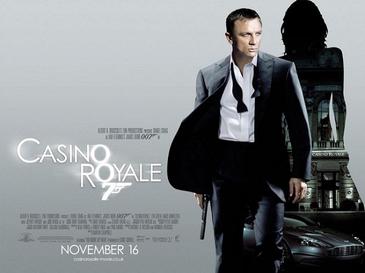
Casino Royale is a UK film based on the novel by Ian Fleming. It is directed by Martin Campbell, written by Neal Purvis, Robert Wade and Paul Haggis and produced by Barbara Broccoli and Michael G. Wilson. It was released on the 14th November 2006 in the UK at the London Premiere and it has a running time of 144 minutes. Due to scenes involving torture, violence, sexual content and nudity, it has been rated as a PG-13. Casino Royale was mainly shot at the Barrandov Studios in Prague with further shooting in the Bahamas, Italy and the UK. The film had a budget of about $150, 000, 000.

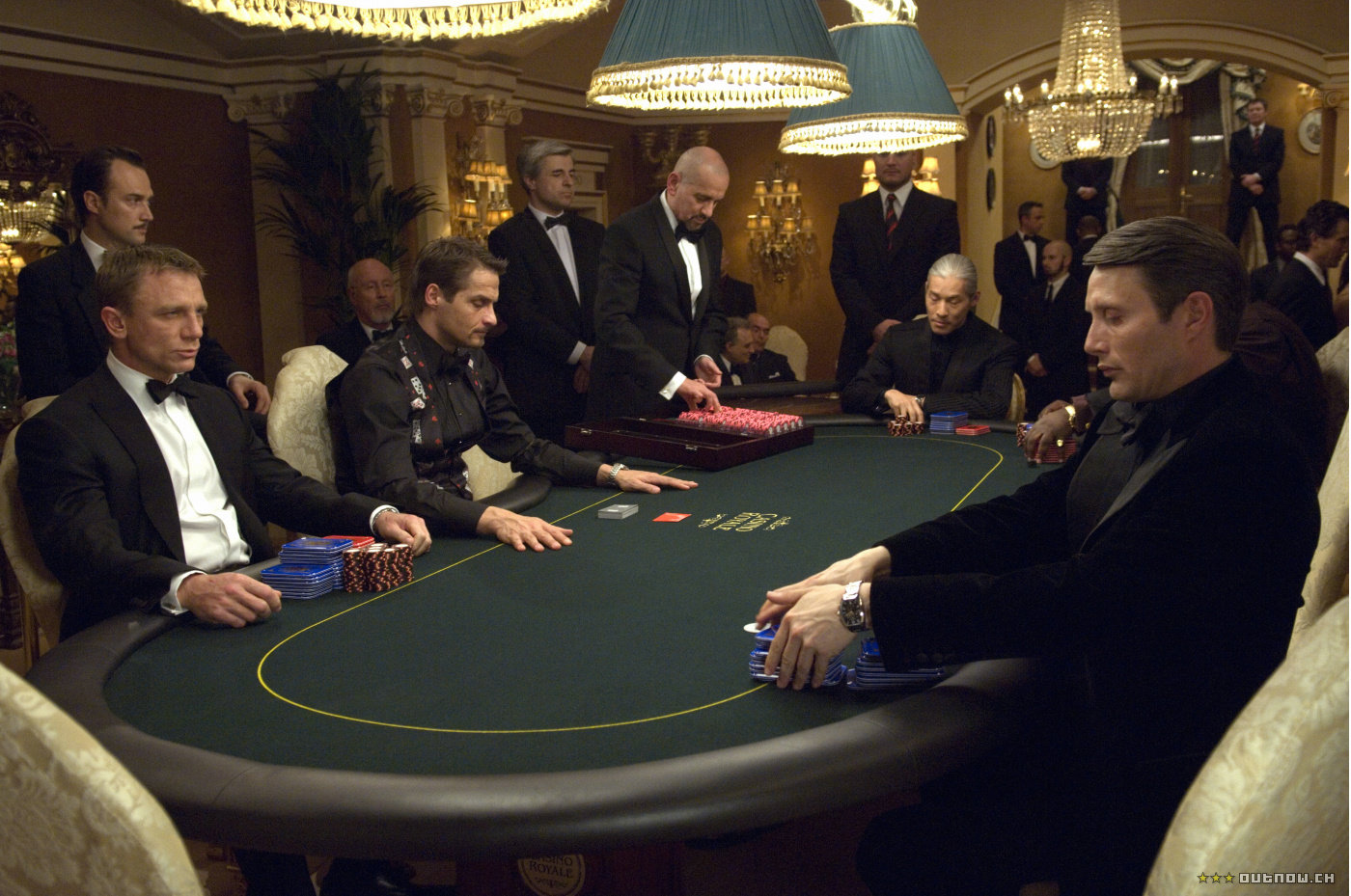
Starring Daniel Craig (James Bond), Eva Green (Vesper Lynd), Mads Mikkelsen (Le Chiffre), Judi Dench (M), Jeffrey Wright (Felix Leiter) and Giancarlo Giannini (Rene Mathis), Casino Royale goes back to the basics with a gripping narrative covering the genres of action, adventure, thriller and mystery. Bond has just been promoted to his double-0 status and he goes about his first mission as a 007 in which he must take part in a poker game in Montenegro at Le Casino Royale, an assignment set by M16, to which the antagonist, Le Chiffre is also participating in the attempt to win back his money. They know that if Le Chiffre loses the game, it will eradicate his World Terrorist Organization so it is absolutely vital that Bond, along with the help of Vesper (who poses as his wife), Felix and Mathis, wins the game. However, as the game proceeds, the tension builds up as the stakes are raised to an extensive amount of money and the cunning acts of Le Chiffre and his accomplices lead to an alarming climax.


The performances are immaculate and flawless as they provide depth and emotion, creating characters that are truly believable. Daniel Craig in particular grants us with a stunning performance and displays a brutal determination throughout. Mikkelsen maintains the deviousness of Le Chiffre exceptionally with very little fault and the attention to detail is exquisite. Every intense action scene was made to look incredibly realistic by the strong performances and each one was riveting and packed with violence, suspense and drama.


Martin Campbell did an excellent job of exploring meaningful themes that pieced together the narrative and created scenes that were unforgettable, gritty and thrilling. Of course Casino Royale would not have been a true classic without the themes of lust, courage and torture but the film goes deeper with themes such as greed and revenge, the sly double-crossing of the characters Bond thought he could trust. There are no typical clichés displayed in the film, it is stripped back and full of originality and intelligence, the successful fresh start that everyone has been waiting for.  Campbell also created an extremely accurate Mise-En-Scene as those who are of a higher power, such as Bond and Le Chiffre, were often seen wearing black, classy tuxedos whereas when Bond is in Madagascar, the men who lived there wore clothing of a much lower quality, showing the strong contrast in class and wealth.


The cinematography went beyond my assumptions; it was beautiful and genuinely stunning. Without a doubt, the opening credits lived up to their expectations, they feature the song ‘You Know My Name’ by Chris Cornell which fits the film perfectly and the animation itself is clever and creative, possibly one of the best ones yet. At the very beginning of the film, before the opening credits, the scene is in black and white creating tension and a secretive atmosphere. Flashbacks are also used in this scene and are the only part of the film that does not follow a linear narrative. The more intense scenes, such as those in the casino, had little background noise and darker lighting to show the seriousness of the game and the sly, mysterious secrets that some of the characters were hiding. The camerawork was outstanding, there are many close up’s of Craig’s mesmerizing blue eyes which hold hope and boldness and then of the dark, calculating eyes of Mikkelsen which emphasize the evil within Le Chiffre. The chase sequences have movement to them, making you feel as if you are there, witnessing the events first hand; you can feel the adrenaline of the characters rushing through you and it is these moments that make up a phenomenal action based film.

Casino Royale is a magnificent film, perfect for anyone who loves action, romance, suspense and unexpected turning points. Do not let the long running time put you off as the film goes by incredibly quickly due to the powerful narrative that will keep your eyes glued to the screen. It is a definite must watch that you are bound to enjoy.


What To Include In A Film Review

  • Editing       
  • Genre 
  • Themes
  • Narrative
  • Mis-en-scene
  • Camera angles, shot sizes and their meaning 
  • Performance 
  • Sound 
  • Light 
  • Title 
  • Director 
  • Cast
  • Producer 
  • Year of production 

Tuesday, 14 October 2014

London Film Festival: Timbuktu Review

On Friday 10th October, I went with my AS Film class to watch Timbuktu at the London film festival. Timbuktu is directed by Abderrahmane Sissako and it has a running time of ninety seven minutes. It was filmed in Mauritania and it features five different languages which are French, Arabic, Bambara, English and Songhay. I would classify this film as a 12A due to the violence and upsetting scenes that are used which may disturb someone who is below this age. The main genre of Timbuktu is drama because it is based on events that have happened in real life which makes the film very touching because the audience can sympathise with the characters and feel their emotions. The father, Kidane is played by Ibrahim Ahmed, his wife, Satima is played by Toulou Kiki and their daughter, Toya is played by Layla Walet Mohamed. The narrative revolves around this particular family however there are many other key characters that contribute greatly to Timbuktu such as Issan, played by Mehdi A.G. Mohamed, who is the families Shepard.

Timbuktu is a foreign film so there are subtitles at the bottom of the screen. However, when one character does not understand what the person they are talking to is saying due to them speaking different languages, there are no subtitles and I believe this was purposely done by Abderrahmane Sissako to help the audience relate with the character and to understand their confusion as we also do not understand what is being said. The film is about the Jihadists who take over Timbuktu, whose goal is to control the people’s faith, leaving them to suffer. The women were forced to cover their heads and hands and basic enjoyments such as music and football were banned. The main protagonist, Kidane lives with his family in a peaceful environment and his ‘goals’ change throughout the narrative. The first goal he has is for him and his family to stay where they are living in the hope that they will be safe and happy but when his Shepard, Issan accidently lets Kidane’s most loved cow, ‘GPS’ run into fishermen, Amadou’s nets, GPS is killed by Amadou meaning Kidane’s next goal is to confront Amadou on what he has done. However, this confrontation leads to Kidane accidently murdering Amadou meaning he was forced to undergo the strict rules designed by the Jihadists but Kidane knows he has done wrong so accepts the death penalty because he believes it was his fate. His goal now was to make sure his wife and daughter were safe as he loved and cared for them greatly and did not want them to be in any danger like he was. Towards the end of the film, Kidane’s final goal was to protect Satima from being shot as she ran towards him just before he was about to face his death but this goal was prevented from being reached by one of the Jihadists (a protagonist), who murdered the both Kidane and Satima together. Timbuktu follows a linear narrative because the events happen in a clear order and the audience can easily follow the storyline. One of the major themes explored in this film is family because Kidane, Satima and Toya have a very strong bond as a family as they are always looking out for one another and the love they have for each other is constantly highlighted throughout the film. Timbuktu puts across the message that family are very important in order to get through tough situations and having children especially is treasured by the people who live in the town. Another theme shown in Timbuktu is torture because there are several scenes that show someone being violently whipped or beaten and one scene showing two people being stoned to death. These scenes were purposely shown to make the audience realise that this type of torture happens in real life and to help them understand the immense pain the helpless victims experienced.

Personally, I believe that the cinematography in Timbuktu was excellent. In the centre of Timbuktu, where all the chaos was happening, the camera would be handheld in certain scenes to represent that the people were beginning to live an unstable life and the new rules were very unsettling for them. There was also a lot of background noise to create a realistic environment and to help the audience to feel as if they were there and the music being played was more upbeat to show how the people are trying to stay positive despite the new laws. However, when Kidane’s family were shown living in the dunes, the camera was still and there was not any noticeable background noise which emphasizes that the atmosphere they lived in was very quiet and possibly the fact that they were oblivious to what was happening back in the town centre. The music played by Kidane was also very peaceful to show that they were relaxed and did not have nearly as many concerns compared to the people living in the centre on Timbuktu. I noticed that a lot of close up’s were used throughout Timbuktu to clearly show the characters emotions and an extreme close up was used of the cow (GPS) after it was murdered to show blood slowly pouring down its nose. This scene was also very quiet so it gave the audience time to reflect on what had just happened. Many establishing shots were used because the scenes frequently changed so it let the audience know where the characters were, meaning they could keep up with the narrative.

Overall, I enjoyed Timbuktu because the themes expressed were very powerful which made me sympathise a lot with some of the characters and feel grateful for the lifestyle that I have. I also did not struggle to keep up with the subtitles so I was able to gain a clear understanding of the film and focus on aspects such as the cinematography rather than just the dialogue.

Monday, 29 September 2014

Comparison Of 'Soft' and 'Wasp'


Soft is a short film lasting fourteen minutes and nine seconds, it is directed and written by Simon Ellis. The genre is drama with a sub-genre of social realism because the events that occur in this film could easily happen in real life. Due to the violence and swearing used throughout, I would classify Soft as a fifteen. The narrative revolves around two main characters which are the Father, Iain played by Jonny Phillips and his Son, Scott played by Matthew O’Shea. The short film Wasp is written and directed by Andrea Arnold and it is longer than Soft, with a running time of twenty four minutes. Just like Soft, the genre is drama and the frequent swearing means I would also classify Wasp as a fifteen. There are six main characters in this short film which are the Mother, Zoe played by Natalie Press; Dave, Zoe’s old crush played by Danny Dyer; Zoe’s Son, Kai played by Danny Daley and Zoe’s three daughters: Kelly, Sinead and Leanne played by Jodie Mitchell, Molly Griffiths and Kaitlyn Raynor.

Both short films address realistic issues using similar techniques but the main plots for each one are different. Soft is about a group of six teenagers that abuse and attack Iain and Scott at separate intervals and the way they retaliate and deal with the situation. The ring leader of the gang stands out because he is wearing a white tracksuit; this particular outfit is stereotypical of a lower class teenager so immediately portrays him in a negative light. Although on the outside this makes him seem violent and threatening, the colour white makes the audience think of someone who is angelic, possibly showing that when the teenager is not around his friends he is completely different and maybe he is just jealous of the lifestyle both Iain and Scott have. Wasp on the other hand is about a single mother with four children, they are living in poverty and she is desperate for a social life and some time to herself. However, when Zoe unexpectedly sees her childhood crush, Dave, they arrange to go on a date to the pub but she irresponsibly decides to go and bring her young children along with her without telling him. The film as a whole explores the difficulties of motherhood when you are left alone with no help or support, and how living in poverty can greatly impact the upbringing of your children. Soft and Wasp share the theme of fear which runs throughout both of the films. Soft shows fear because the Father is petrified of the gang and we know this because as he is walking away from them, he has a number of flashbacks of him being attacked. However, he does not want to admit this feeling to his Son possibly because he doesn’t want to appear small in front of him and wants to set a good example by not fighting back. Nonetheless, Scott notices this so confronts his Father by asking him the question: “are you scared?” which triggers embarrassment in Iain. Fear is also shown in Wasp when Zoe sees a wasp on the window that her young Son, Kai is staring at. This wasp may have been there to represent that something bad was about to happen and it was a warning sign. However, when Zoe lets it out of the window, it suggests that just for that one night, she wanted to be free and forget about the barriers that get in the way of her having that freedom every day. Soft does show themes other than fear. Bullying is one because the group of teenagers are taking advantage of the Father and Son by abusing and being extremely rude to them; this makes victimisation a theme because Iain and Scott are left powerless when the gang surround them. At the end of the film, bravery and courage is shown from Scott when he stands up for himself and fights back with a baseball bat to which Iain is shocked by as it was unexpected from both him and the audience. The theme of desperation is shown through Zoe and her children in Wasp. When Zoe meets Dave at the pub, she leaves her children outside and when she goes out to see them, she starts dancing with them which is a very touching scene as it portrays her as helpless because she is desperate to keep her children happy, emphasising how much she truly loves them. As the evening turns to night, the children are still outside alone and a group of older teenagers walk past and accidently drop some fast food on the floor without picking it up. The eldest daughter, Kelly notices this and brings the food over to her other siblings and they eat it off the floor, this is upsetting to watch as it shows how hungry they are due to Zoe having little money, an impact of living in poverty.

The cinematography of both Soft and Wasp is used in a very similar way. When the teenagers are being shown in Soft, the camera is handheld and is of a very poor quality with loud sound. This gives the impression that one of the gang members is filming the events on their phone which creates a realistic atmosphere. However, when the Father is being shown on the screen, still shots are used and the sound is much quieter so that you can hear peaceful noises such as birds singing. I think Simon Ellis did this to show that the teenagers have little money and their standard of living is very low, whereas the Father lives a good quality life as he is wealthy. Likewise with Wasp, the camera quality is reasonably poor to represent the poverty the family are surrounded by, as well as moments in which the camera is shaky to imply that the way they live is very unsettling and Zoe rarely has time to relax. Both short films use natural lighting and background noise to give the audience the feeling that they are actually there and to put you in the shoes of the characters. Close ups are effectively used in Soft and Wasp to show the emotions each character is feeling and in Wasp, an extreme close up is used to show the wasp flying into the baby’s mouth, making the audience feel tense as they are unsure of what is going to happen next. Wide shots are used in both to show the surroundings and to let the audience know where the characters are in that moment of time. The endings of both short films are contrasting as Soft ends with the Father turning off the car alarm, picking up the baseball bat and walking inside. The atmosphere is very silent which gives you time to reflect on what has happened. Wasp ends with Dave driving Zoe and her Children home as they are singing an upbeat song, giving the impression that everything is going to turn out just fine and their life is going to improve from there onwards.

Overall, I thoroughly enjoyed Soft and Wasp because you feel sympathy towards a lot of the characters which makes you think about people in real life who suffer from the same problems, resulting in each film being emotional and moving. Additionally, Simon Ellis and Andrea Arnold made clever use of camera work and themes in order to tell each narrative in an effective way.


Wednesday, 24 September 2014

'Get Off My Land' Review


“Get off my land” is a short film that is directed and written by Douglas Ray, with the running time being four minutes and forty two seconds. The suitable audience for this short film is people who are aged fifteen or over and this is due to the strong violence that is used which may upset or scare someone below this age. The cast is very small as there are only three main characters which are a Man, Woman and a farmer. The Man is played by Rafe Spall, the Woman by Ruth Wilson and the farmer by Robert Glenister; these actors did an excellent job and each character plays a major part in telling the story.
This short film is about a Man and Woman, who are most likely a couple, that are taking a walk across the countryside. They come across a farmer who claims the land to be his own and tells the couple that they cannot walk across it, to which they are not convinced. The story then continues and ends unexpectedly as Douglas Ray made clever use of a plot twist which leaves the viewer in shock and confusion.  “Get off my land” addresses many key themes and ideas throughout the film. At the very beginning, the couple are walking along a muddy footpath in which the Woman is leading the way with the Man carefully trailing behind. He is wearing jeans and bright white trainers that are now completely covered in mud, showing that he came unprepared for the walk which implies that he was forced into going by his partner. The main themes of this short film are possession and vigilante. Possession because the film is about a farmer who believes he has ownership of the land and uses this idea against the couple who are clearly causing no harm, and vigilante because the farmer unofficially tries to prevent a ‘crime’ and carries out his own form of justice to the oblivious Man and Woman. The genre of “get off my land” is dark comedy which is when serious issues, which are cruel and morbid, are treated in a humorous way.
In general, the shot sizes do not show much of a variation, there are many close ups that are used to convey the characters emotions as well as medium shots which are mostly used when the characters are having a conversation. This helps the viewers to engage more with what is going on, so they feel as if they are either a part of the conversation or listening in. Long shots are used to show the surroundings, and a panoramic shot is used at the beginning which displays the land that the couple are walking across. The majority of the camerawork is handheld which made the environment more realistic for the viewers and it makes you feel as if you are actually there. Very few cuts were used throughout the film and the editing was very basic. This again makes the film much more realistic and helps the viewers to focus only on the story as they were drawn in more and more as it progressed. Natural lighting was used because the film is set outside so it is more believable to watch and it helps to keep the film simple rather than overdone.

Overall, I believe this short film was very effective because it is easy to understand the basic meaning but it goes deeper which enables the audience to explore various issues which concern each individual character and the story as a whole. 

'Friday Night Dinner' Review


Friday night dinner is a British television sitcom about a Jewish family of four who have dinner together every Friday night, which never goes to plan and almost always ends in a disaster. The events that occur during each episode are unexpected yet hilarious and mirror family life well. It is not your typical sitcom because it has a sense of realism to it and it addresses issues that could well happen to an ordinary family, making Friday night dinner an original and refreshing show. This entertaining show takes situations of little value or importance and turns them into priceless ‘laugh out loud’ moments with the strong cast helping to enhance this humour.
Normally, each episode is different and does not usually follow on from the previous one. This generally makes the episodes more exciting and intriguing as you are uncertain of what is going to happen next, therefore you are left feeling curious and wanting more.  Each individual plot is fresh with new jokes constantly on the go as well as old, consistent jokes which help to make the show unique and engaging.
 The Mother, Jackie is played by Tamsin Greig and can be described as immature yet easily wound up by the behaviour of her sons and husband. Paul Ritter plays the role of the peculiar Father who has a very low attention span and many odd habits leaving him socially inept. Adam is the elder son and is played by Simon Bird, an actor well known from shows such as the inbetweeners. He is a failed musician who makes a living by creating jingles, and quite often is the victim of mishap. The younger son, Jonny, played by Tom Rosenthal, is always trying to play practical jokes on Adam and start fights with him as he knows he will retaliate. Jonny works as an estate agent for ‘Garvins’.
The Families neighbour, Jim often makes a few appearances during the course of each episode. He is extremely awkward and is always leaving gaps in conversation, as well as being terrified of his own dog. His character is rather ironic as the audience want to see more of him whilst the family do not want to see him at all. Jim is played by Mark Heap. Bonus characters that appear in some episodes include the Gran who is Jackie’s Mother, her boyfriend Mr Morris and Val who is Jackie’s best friend.
The overall appearance of the characters is very similar to how a traditional family would look; this makes them more relatable to the viewers because it is much easier to connect with them and their way of life, also many similarities can then be found between the viewers and certain characters.
In my opinion, Friday Night Dinner creates the feel of family life very well and the chemistry between the cast is flawless. Each individual character is hilarious in their own way, meaning that everyone will find something to relate to. The writing of this show is impeccable, providing us with excellent dialogue as well as fantastic humour.
Friday night dinner is created and written by Robert Popper, and directed by Steve Bendelack and Martin Dennis. There are three series and nineteen episodes in total with a running time of approximately twenty five minutes per episode. This programme is intended for teenagers and above due to the adult humour which is frequently used. It can be found on channel 4 and is definitely worth watching, it will have you laughing in moments.